Month: September 2026

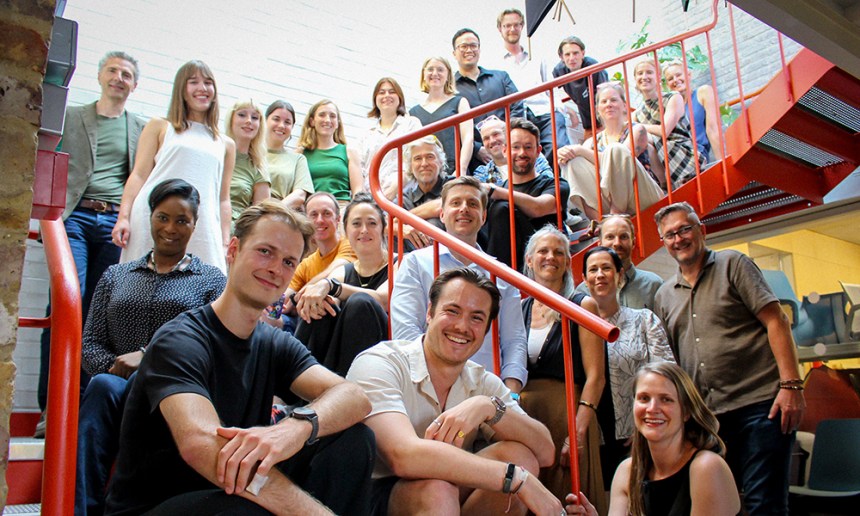
Fifteen designers have developed concepts to tackle vape fires, improve battery recovery and reduce product waste through a pilot programme funded by the Chartered Institution of Wastes Management (CIWM).

The Design Skills for Embedding Circularity programme paired designers with waste and resource specialists, before challenging them to apply their learning to problems set by Biffa and Decathlon.

A six-week design sprint, which ended in mid-July, produced proposals ranging from products designed for easier recycling to a digital platform connecting designers with waste management professionals.

Biffa’s briefs focused on fire risks from discarded vapes and the recovery of valuable components, particularly lithium batteries, from small electronic devices. Decathlon’s challenges covered festival tent waste, tennis ball waste and packaging for buy-back and resale schemes.

Among the participants, Jess Wright of Imperial Brands worked with Biffa on consumer research exploring how to encourage correct vape disposal and prevent fires. Designability’s Pippa Bridges investigated how product redesign could make batteries easier to detect and remove during waste recovery.

A circular economy depends on bridging the gap between front-end product design and end-of-life resource recovery

Abby Brazier developed a toothbrush design intended to prevent it being lost through holes in industrial sorting equipment. Jonathan Irawan proposed Mobius, a digital platform that would use real-world data to help designers and waste professionals exchange information and better understand material flows.

Pearson & Lloyd’s Luke Pearson and Rory Mullins explored local, decentralised waste systems, including the use of responsive 3D-printed products to meet community and environmental needs.

“A circular economy depends on bridging the gap between front-end product design and end-of-life resource recovery,” said Richard Hudson, CIWM’s technical manager and project lead for the programme.

“By putting professional designers directly onto facility floors alongside our sector’s waste and resource experts, this pilot has demonstrated the power of cross-sector collaboration.”

The wider pilot involved CIWM, URGE Collective, the Design Council, WRAP and CEI. Since January, participants had visited recycling plants, a paper mill, an energy-from-waste facility, landfill sites and reuse and remanufacturing operations, guided by circular economy specialist Sophie Thomas.

An accompanying online programme, curated by designer and impact strategist Alexie Sommer, covered topics including material innovation, recycling technology, circular business models and consumer behaviour.

URGE Collective is seeking funding partners for future editions of the programme.

Findings will be shared at an invitation-only symposium at the Design Museum in London on 12 November 2026.

The post Designers tackle vape fires and battery recovery in circular economy pilot appeared first on Circular Online.

Zero Waste Scotland is set to join NatureScot and the Scottish Environment Protection Agency (SEPA) in a new national environment body under plans announced in the Scottish Government’s Programme for Government.

Scottish Forestry could also become part of the organisation, which is intended to combine the expertise and key functions of the existing bodies while removing barriers and improving the impact of Scotland’s environmental work.

Consultation and stakeholder engagement are expected to begin in the autumn. The Scottish Government has indicated that the new body could be ready to begin operating by 2029.

In a message to stakeholders, Zero Waste Scotland said it supported the ambition to improve outcomes for people, nature and the economy and would play an active role in shaping the new organisation.

It also sought to reassure partners that its existing programmes would continue during the transition.

Chief executive Ciaran McGuigan said work continues “at pace” and with the full support of the Scottish Government.

I can assure all who support our collaborative work to build the circular economy that this work continues at pace and with the full support of the Scottish Government.

He said: “Zero Waste Scotland recognises and supports the principle of Public Service Reform in Scotland. We support the emphasis placed by the Scottish Government on delivering even better outcomes for the people of Scotland and we will continue to play our part in building the more circular economy that we know contributes to the future economic and environmental health of the nation.

“While the work of consulting on and then creating the new body will develop over the coming year or so, I can assure all who support our collaborative work to build the circular economy that this work continues at pace and with the full support of the Scottish Government.”

Zero Waste Scotland has operated under that name since 2010, initially as the Scottish Government’s single zero-waste delivery programme managed by the UK-wide Waste and Resources Action Programme. It became an independent, not-for-profit organisation in 2014 and an executive non-departmental public body in 2024.

Today, it is Scotland’s dedicated circular-economy public body. It works with government, businesses, local authorities and communities to reduce the consumption of natural resources, prevent waste and keep products and materials in use for longer.

Its work includes producing research and evidence, advising ministers, bringing organisations together and supporting practical action on resource efficiency, reuse, recycling and behaviour change.

The organisation plays a central role in delivering Scotland’s wider circular-economy ambitions. The Scottish Government’s Circular Economy and Waste Route Map to 2030 contains 11 priority actions covering waste reduction and reuse, recycling reform, lower-carbon waste disposal and measures to strengthen the circular economy.

A separate Circular Economy Strategy for Scotland, published in March 2026, sets out a longer-term vision to 2045. It aims to move Scotland away from a “take, make and dispose” economy and initially focuses on the built environment, energy infrastructure, textiles, transport and food.

The strategy and route map are underpinned by the Circular Economy (Scotland) Act 2024, which provides powers to establish national targets and introduce further measures covering recycling, waste prevention and the sustainable use of materials.

Zero Waste Scotland said its focus throughout the reform process would remain firmly on delivering that transition.

The post Zero Waste Scotland to join new national environment body appeared first on Circular Online.

The first thing that comes to mind when you think about blockchain jobs is the six-figure salary. However, any beginner searching for blockchain jobs with no experience is likely to end up with disappointment when they look at most of the blockchain job descriptions. You will have a hard time understanding how an ‘entry-level’ role requires at least five years of professional Web3 experience.

  • The blockchain job market introduced almost 66,500 new crypto jobs in 2025, which is 47% higher from the previous year. (Source
  • As of 2025, the global blockchain industry has employed around 1.6 million professionals in various sectors. (Source

Even with the massive fluctuations in crypto markets worldwide, the demand for blockchain talent continues growing. Employers not only look for developers and engineers but also experts who understand the broader blockchain space and can contribute valuable outcomes to their blockchain and Web3 projects. You can get a job in the blockchain space without any prior experience when you know what you have to do and what to avoid.

Build your identity as a certified blockchain expert with 101 Blockchains’ Blockchain Certifications designed to provide enhanced career prospects.

General Approach to Finding Blockchain Jobs with No Experience 

Many people who want blockchain jobs start by spending months reading about cryptocurrencies and blockchain technology. The candidates then take online courses and certifications to prove their capabilities for different blockchain jobs. Subsequently, candidates update their resume with phrases like “interested in blockchain” or “blockchain and crypto enthusiast”. However, these methods seem to have little impact when the candidates get zero responses for job applications. 

Anyone trying to find how to get a job in crypto with no experience must know that hundreds of people are trying to follow the general approach. It is important to understand that reading about crypto does not mean that you are eligible to work on crypto projects. On top of it, applying for multiple jobs on job boards lands you up in the middle of intense competition.

You should remember that companies want blockchain experts who can do the job and not people who can learn on the job. Employers look for specific things in candidates who apply for blockchain jobs to find the ideal candidate for specific roles.

  • The candidate’s resume must show a list of specific and transferable skills that can deliver clear results.
  • Your cover letter should outline the projects that you have worked on in the blockchain and crypto space.
  • Candidates can also build a strong portfolio with a list of public and open-source projects where they demonstrated their skills.
  • The GitHub of a candidate serves as verifiable proof of their active contributions in projects under development.

Are you ready to take your career to the next level? Join our Premium plan now and get access to exclusive web3 & blockchain job listings on 101 Blockchains.

Understanding the Significance of a Strong Portfolio

If you are preparing for blockchain jobs without any prior experience, then you are might be focusing on creating CVs. Many candidates believe that an appealing CV is the best way to attract the attention of employers. However, shifting the focus towards building a strong portfolio can make a huge difference. 

Professionals working in crypto jobs remote no experience roles don’t wait for employers to give them a chance. On the contrary, they created their own reputation by participating and contributing to real-world projects before anyone hired them. The essential tricks to create a portfolio that can help you land blockchain jobs without any experience can offer significant benefits for your career.

  • Always choose a specific area where you want to work in, such as development, content, design, or analysis.
  • Participate in public projects, whether it is a new smart contract or analysis of codebase. 
  • Gain experience in using crypto products as it will empower you with technical acumen.
  • Share your work across different platforms, including Twitter, Medium, and GitHub.
  • Look for opportunities to engage with the blockchain and crypto community on Discord and across different forums and events.

Unraveling the Best Practices to Stand Out in a Crowded Job Market

The competition for blockchain jobs is growing at an unprecedented pace and you can see it clearly in the number of applicants for crypto jobs. As the market grows more saturated, it is difficult for people without any experience to find blockchain jobs. You need to stand out from the crowd, even for entry level blockchain jobs, by following the best practices suggested by experts.

1. Maintain Specificity in Your Resume 

If you take a look at most of the candidate resumes for blockchain jobs, you will find generic descriptions. Employers know that they are hiring for the role of a blockchain developer or analyst and don’t want candidates looking for “opportunities”. 

You can grab the attention of a recruiter by mentioning specific details about your blockchain expertise. Candidates can point out that they are fluent in Solidity development, know the best practices for DeFi security, and have deployed smart contracts. Providing specific details makes it difficult for employers to forget your application and increases your chances of securing the job.

Create new, high-level, innovative blockchain solutions for different industries as a highly-skilled blockchain developer with a Blockchain Developer Career Path.

2. Build Your Skills and Portfolio in Public

One of the unique things that beginners should try to find blockchain jobs without any experience is to share their journey in public. Posting small achievements on Twitter or social media and forums alongside maintaining documentation of your learning journey can change your career trajectory.

Sharing your progress in public will help in building your reputation as you learn new skills and also creates accountability. It will also prove that you are a good communicator and know how to present your views, which is a valuable skill in any professional. Most important of all, your public image as a blockchain expert will also attract opportunities you never knew existed.

3. Work on Real-World Projects

Building another generic smart contract or NFT project may sound like the best choice for your portfolio. However, finding blockchain jobs with no experience requires expertise in solving problems in the real-world. You should showcase your ability to solve a problem that you have personally experienced.

Candidates can build a tool to estimate gas fees or write a comprehensive guide on bridging assets between blockchain networks. When you show that you know how to solve real problems, you convince the employers that you bring real value to the table.

4. Contribute to Existing Projects

Beginners preparing for blockchain jobs without any experience may think that building a new project from scratch is extremely difficult. It is important to know that you don’t have to build from zero to showcase your blockchain expertise. You can try many other things, such as,

  • Fixing bugs in open-source projects
  • Improving the documentation for blockchain protocols
  • Designing better UX for existing apps
  • Creating tutorials for existing crypto tools and projects
  • Give relevant answers to questions on Discord and other online forums

The efforts you invest in existing projects will enhance your hands-on experience and credibility. You can also build connections with the team behind the existing projects and expand your professional network. As a matter of fact, the references from the team can show that you have genuinely contributed to the project.

5. Focus on Niches and Maintain Consistency

Candidates looking for blockchain jobs with zero experience often make the mistake of ignoring the importance of choosing a niche. If you say that you are interested in DeFi, NFTs, metaverse, and DAOs, the recruiter cannot decide which role will be the best for you. With a specific niche, you can prove that you are not another generalist who knows little about everything.

As you pursue your favorite blockchain jobs as a beginner, it may be difficult to maintain the same consistency throughout. Therefore, you should always look for steady progress in your learning journey and build your skills one week at a time. 

Final Thoughts

Every candidate who wants to know how to get a job in crypto with no experience must understand that the experience does not come only from a job. You have to show proof that you can do the job and get things done rather than telling employers that you know things. Beginners can start with online courses and certifications, followed by picking a specific niche and participating in real-world projects to gain experience. Choose the right platform for blockchain training, and you will find the fastest path to your favorite blockchain job now.

*Disclaimer: The article should not be taken as, and is not intended to provide any investment advice. Claims made in this article do not constitute investment advice and should not be taken as such. 101 Blockchains shall not be responsible for any loss sustained by any person who relies on this article. Do your own research!

The post Can You Get a Blockchain Job Without Experience? appeared first on 101 Blockchains.
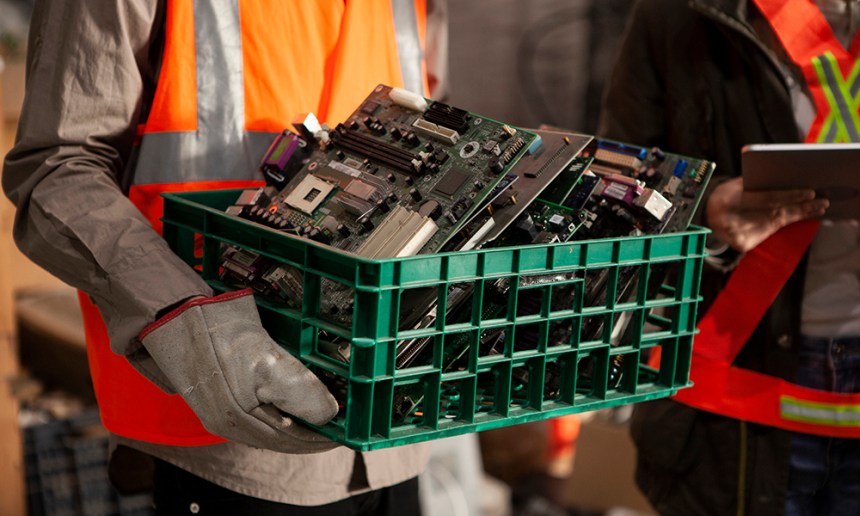
ScottishPower has reported a 99.9% combined reuse and recycling rate for materials from the decommissioning of the original Hagshaw Hill wind farm in South Lanarkshire.

According to the company, a report compiled by Mott MacDonald found that 79.5% of the materials from the site’s 26 turbines and associated components were recycled and 20.4% reused.

Mott MacDonald said it reviewed project decommissioning data and interviewed stakeholders. ScottishPower did not publish or link the report, however, and no public copy had been located as of 1 September 2026.

The company’s website announcement does not disclose the total tonnage, whether the percentages were calculated by weight, the material inventory or infrastructure included, or the calculation and classification methods used. It also does not explain the difference between the reported 99.9% and 100%, although The Times separately reported, attributing the information to ScottishPower, that less than 0.1% of the turbine materials went to landfill.

It remains unclear from the published material whether the assessment included foundations, concrete, underground cables, access infrastructure, oils and electrical equipment, or any residues produced during recycling.

The absence of a material breakdown is significant because the chosen boundary can change the result substantially. A July 2026 government-commissioned study found that concrete was the dominant onshore-wind material when foundations were included. Separately, the government’s Onshore Wind Taskforce strategy says the readily recyclable steel tower comprises 70% of a turbine, although it does not state the measurement basis. Composite blades present a greater technical challenge.

A November 2024 presentation by European Metal Recycling described a Hagshaw Hill case study covering 24 turbines and 657 tonnes, reporting 97% recycling and 3% reuse. It also referred to 20 major and minor components recovered, but did not define the 657-tonne inventory or state explicitly how the percentages were calculated.

Those figures are not directly comparable with Mott MacDonald’s later 79.5% recycling and 20.4% reuse breakdown. ScottishPower says the latter relates to all 26 turbines and associated components, but its announcement gives no tonnage, material boundary or calculation basis. The EMR presentation also predated the subsequent processing of Hagshaw’s blades. The difference could therefore reflect scope, timing, denominator or classification rather than a change in performance.

Blades processed in Northern Ireland

ScottishPower said all the former turbines’ blades were processed by Lurgan-based Plaswire into a polymer intended for construction and engineering applications, including fencing, marker posts and drainage components.

In an earlier pilot involving Ørsted, rather than the Hagshaw project, Plaswire said blades were cleaned, shredded and granulated before being incorporated into its RX Polymer. The route uses the recovered material in products other than new turbine blades.

The cited releases do not provide the weight of the Hagshaw blades, the process yield, the volume of blade-processing residues or evidence that products containing Hagshaw-derived material have entered the market. ScottishPower said some other turbine components would be reused for industry training.

Hagshaw Hill began operating in 1995 and is identified by ScottishPower as Scotland’s first commercial onshore wind farm. Its original 26 turbines were dismantled in 2023 and replaced with 14 turbines providing more than 79MW of capacity, commonly rounded to 80MW.

ScottishPower said at least 10 companies in Scotland and elsewhere in the UK received contracts connected with the decommissioning. It previously reported that more than 100 jobs were supported across the combined decommissioning and repowering programme, rather than recycling alone.

Plaswire chief executive Andrew Billingsley said the company’s output was 50% higher this year after growing by 30% in the previous year, and that it expected to double its workforce over the next 12 months. The ScottishPower announcement gave neither current production tonnage nor current headcount, so the absolute scale of the proposed expansion cannot be determined from it.

The potential market is growing. The Onshore Wind Taskforce strategy predicts that decommissioning will peak in the late 2020s and throughout the 2030s at approximately 0.5GW to 1GW of capacity annually, with most of it in Scotland. ScottishPower separately said around 1GW of turbines in its own portfolio was due to be taken down over the coming decade.

The July 2026 government-commissioned study concluded that reuse and refurbishment generally retain more value than material recycling, while refurbishment offers the strongest employment benefits. It also identified limited UK recycling and processing infrastructure and weak business cases for some material streams as constraints on developing domestic capacity.

Publication of the Mott MacDonald report, including its material inventory, boundaries and calculation method, would allow the Hagshaw result to be assessed against those wider challenges.

The post ScottishPower reports 99.9% reuse and recycling at Hagshaw Hill wind farm decommissioning appeared first on Circular Online.