Month: August 2026

Trusting cryptocurrencies is probably one of the hardest challenges for anyone, especially with instances of scams and fraud making headlines. The good news for the crypto landscape comes with introduction of ISO 20022, a new standard for electronic communication between financial institutions. As the discussions about impact of ISO 20022 on crypto adoption continue to gain limelight, it is more important than ever to learn about ISO 20022.

The global financial system will go through a major messaging upgrade as ISO 20022 makes conventional financial messaging formats obsolete. With the growing adoption of ISO 20022 across central banks, cross-border payment networks, and commercial lenders, the crypto landscape must also prepare for some massive changes. The biggest question for cryptocurrency revolves around whether ISO 20022 will drive cryptocurrency adoption and how it will achieve the same.    

Identifying the Fundamental Highlights of ISO 20022

Many people must be familiar with the International Organization for Standardization, or ISO, as the authority who sets quality standards for various products. ISO 20022 has emerged as the latest global standard for financial messaging and data exchange between financial institutions. The relationship between ISO 20022 and crypto is evident in the fact that the standard will offer a framework for crypto projects, crypto exchanges, and stablecoins to connect with traditional financial systems.

One of the distinctive aspects of ISO 20022 is that it leverages XML and JSON schemas to provide a definitive structure to transaction data exchanged between banks, financial market infrastructures, and payment processors. It will introduce a major paradigm shift from the unstructured formats and rigid caps on messaging types. The old financial messaging standards and formats removed crucial information, including party names, addresses, and purpose of transactions. 

The limitations of legacy financial messaging formats created the need for costly manual reviews, introduced compliance risks, and resulted in transaction delays. ISO 20022 aims to overcome these barriers with rich data messaging formats that can include granular details in transaction data. The standard requires addition of,

  • Complete identity details of the sender and beneficiary of transactions
  • Unique end-to-end transaction references 
  • Compliance data for anti-money laundering and sanctions screening
  • Specific regulatory purposes and invoice details with tax identifiers

The ISO 20022 standard also played a vital role in unification of high-value RTGS systems worldwide. As a result, it has successfully achieved a single common language for global financial transactions.

Step into the future of finance—become a Certified Digital Asset Compliance Expert (CDACE)™ and lead with confidence in crypto compliance, auditing, and governance.

Unraveling the Myth behind ISO 20022 and Crypto Adoption

You may have assumed that implementation of ISO 20022 will bring a list of ‘compliant’ crypto coins to mainstream finance. However, your search for ISO 20022 crypto coins list must begin only after clearing a major misconception. It is important to remember that ISO does not provide official certification or approval for individual cryptocurrencies. If a crypto project claims that their token is ISO 20022 compliant, then it may have different meanings.

  • Standardization Working Groups

The ISO 20022 mark may mean that organizations associated with the crypto project are active participants in ISO financial standards working groups.

  • Enterprise Integration Layers

The ISO 20022 standard can also suggest that the payment network around a crypto project supports the messaging format natively or through different API gateways.

  • Data Payload Compatibility

Another notable implication of the ISO 20022 standard is that the state machine and transaction metadata fields can naturally accept structured XML and JSON payloads without modifications in the underlying protocols.

ISO 20022 does not offer an approval system for crypto projects and serves as a communication standard for messages between crypto projects and financial institutions. Compliance with the standard ensures that a crypto project can interact with banks in the native language of the bank.

Master the future of digital finance! Gain practical fluency in integrating stablecoins with DeFi platforms, smart contracts, crypto wallets, and cross-border payments in the Stablecoins Mastery Course.

How Will ISO 20022 Drive Crypto Adoption Higher?

Readers might have believed that ISO 20022 will not have any impact on crypto adoption as it is just a messaging standard. However, you must also know that ISO 20022 adoption will boost crypto adoption by resolving challenges with institutional utility, interoperability, and compliance.

  • Opening New Doors for Institutional Capital

Many major financial institutions stayed away from public blockchain networks when it came to cross-border liquidity. The biggest problems emerged during translation of legacy banking instructions to custom blockchain payloads, which demanded specialized infrastructure.

With the ISO 20022 standard, banks will not have to worry about this operational overhead. If the core system of a bank generates a payment message, then ISO 20022 compliant crypto gateways can accept the message directly. Subsequently, the crypto gateway can verify the essential parameters and trigger transaction settlement with on-chain bridge assets or stablecoins.

  • Faster Adoption of CBDCs and Tokenized Assets

Central Bank Digital Currencies or CBDCs and tokenized real-world assets or RWAs have become the most prominent assets in the crypto landscape. The most interesting thing about these crypto assets is that their design aligns perfectly with existing banking infrastructure. As a matter of fact, many central bank trial projects have adopted ISO 20022 messaging formats to make the best use of these assets.

Blockchain protocols that follow the ISO 20022 standards can work as the best picks for settlement layers or bridges for these new institutional digital assets. The seamless interaction of CBDCs and tokenized assets in mainstream finance will create more trust in crypto adoption.

Enroll in the Real-World Asset (RWA) Tokenization Fundamentals Course and gain the skills to master blockchain, smart contracts, and digital asset infrastructure. Start your journey today!

  • Addressing the Regulatory Hurdles for Crypto Adoption

The Financial Action Task Force or FATF ‘Travel Rule’ is one of the biggest obstacles to large-scale institutional adoption of cryptocurrencies. It states that financial institutions must share the details of sender and receivers of wire transfers that cross specific thresholds. The ISO 20022 standard calls for mandatory inclusion of structured fields for including party information. 

Crypto payment providers and exchanges can capitalize on ISO 20022 for crypto adoption by building natively around the ISO schemas. The standard will ensure that all regulatory formalities become automated and don’t require manual efforts. On top of it, the structured transparency helps legal and compliance teams in verifying crypto-backed settlement products.

Understanding the Primary Tradeoffs with ISO 20022

The advantages of ISO 20022 for large-scale adoption of cryptocurrencies revolve predominantly around boosting enterprise utility of cryptocurrencies. However, the adoption of ISO 20022 also brings some formidable challenges in the broader crypto landscape. One of the foremost tradeoffs with ISO 20022 is clearly visible in the decentralization dilemma. 

The original principles of public blockchain networks focused heavily on censorship resistance, freedom from centralized control, and peer-to-peer transactions. The design of ISO 20022 aligns more closely with regulated, permissioned or semi-permissioned and centralized financial institutions. As a result, the standard stands in direct conflict with the fundamental ethos of the crypto space.

You will notice that ISO 20022 demands detailed party identification in payment details, thereby revealing identities. On top of it, decentralized exchanges and automated market makers cannot collect valid ISO metadata without introducing centralized gatekeepers. 

Final Thoughts 

The effect of ISO 20022 on adoption of cryptocurrencies will focus primarily on institutional adoption. As a result, stablecoin issuers, tokenized asset platforms and enterprise-centric crypto projects will achieve more growth in adoption rates. ISO 20022 will provide a standardized global language for connecting the crypto landscape with mainstream financial services. It reduces the barriers for global banks to adopt crypto networks for cross-border payments, liquidity management and foreign exchange settlement. The ISO 20022 standard will provide the infrastructure required to change a speculative asset group into an integral component of global finance. Learn more about the evolution of cryptocurrency regulations and standards with the best resources now.

*Disclaimer: The article should not be taken as, and is not intended to provide any investment advice. Claims made in this article do not constitute investment advice and should not be taken as such. 101 Blockchains shall not be responsible for any loss sustained by any person who relies on this article. Do your own research!

The post Will ISO 20022 Increase the Adoption of Cryptocurrencies? appeared first on 101 Blockchains.

Circular economy

The Circular Economy Institute (CEI) has launched the CEI Business Excellence Partner programme to verify organisational circular progress.

The programme acts as a structured, independently verified recognition framework designed to assess and validate how effectively circular principles are embedded across an organisation’s operations.

The CEI says it marks a ‘significant step’ forward in the CEI’s mission to drive systemic change across industries and economies.

It provides aims to provide organisations with a credible, evidence-based pathway to benchmark their progress on circularity and become independently recognised for their commitment to the circular economy.

The CEI says the ‘CEI Business Excellence Partner’ programme responds to the need for organisations to demonstrate authentic circular commitment by offering a rigorous assessment process backed by the global standing of the Circular Economy Institute.

Commenting on the launch, Katie Cockburn, Senior Director for Policy, Media and Education, Circular Economy Institute, said: “The CEI Business Excellence Partner programme represents a critical next step in how we support organisations on the circular journey.”

“We know that genuine circular transition requires more than policy or aspiration. It demands structural change, measured against clear and transparent criteria.”

“This programme gives organisations the tools to transparently assess where they are, a clear pathway to improvement, and the independent recognition their progress deserves. It is designed to be both rigorous and practical, because real progress requires both.”

How the programme works

The programme evaluates participating organisations across seven core functional areas; each independently scored from 0 to 3:

  • Commitment to circular economy principles – embedding circularity into organisational mission, vision, and measurable targets.
  • Circular practices in operations – integrating circular design or product-service models into core business activity.
  • Supply chain and procurement – aligning supplier standards and purchasing decisions with circular principles.
  • Measurement and transparency – tracking and publicly reporting on material use, waste reduction, and carbon footprint.
  • Innovation and continuous improvement – investing in research, development, and emerging circular technologies.
  • Stakeholder engagement – actively involving employees, customers, and communities in circular practice.
  • Ethical and responsible conduct – upholding fair labour standards, ethical business practice, and environmental compliance.

Following assessment, organisations are designated to one of three progressive tiers, starting with Bronze for organisations establishing the foundations of circular practice, through to Silver for those with more advanced application of circular principles across multiple business functions.

The most advanced is Gold, reserved for organisations showing exemplary sector leadership and systemic circular integration.

Successful partners are authorised to use their designation across corporate communications, client proposals, sustainability reporting, and public-facing materials.

Find out more

To find out more and begin your organisational assessment, email greig.porter@ceinstitute.org.uk.

Each CEI Business Excellence Partner will receive a suite of benefits designed to support continued learning, team development, and professional visibility, including use of the partner logo credentials, access to the global CEI community and local clubs, discounts on training and events, and amplification across CEI channels.

Application and annual membership fees are structured in proportion to organisation type and size, ensuring accessibility across sectors and scales.

CIWM Affiliated Organisations and CIWM Commercial Partners receive a 50% discount on membership fees, and founding members of the programme receive a 30% discount.

The post Circular Economy Institute launches ‘Business Excellence Partner’ programme appeared first on Circular Online.

Metal recycling

Tom Bird, executive chairman at Enicor, explains why the free and fair global trade of recycled metal is essential in the development of a robust, resilient, circular supply chain.

As protectionist tariffs, tighter regulation, rising energy prices, and geopolitical tensions disrupt recycled metal supply chains at a pivotal time in the market, a fresh approach is vital to deliver greener, high-quality supplies amid increasing demand.

EU data make it clear that metal recycling, especially aluminium and copper, is highly effective in reducing the environmental and cost impacts of extracting virgin ores. The UK generates more than 11 million tonnes of ferrous and non-ferrous metal for recycling annually.

Currently, between 70 and 80% of this volume is exported, primarily to non-Organisation for Economic Co-operation and Development (OECD) countries like Turkey. However, policy drivers are challenging the efficiency and effectiveness of this ecosystem in ways that could prove damaging in the long term.

Recognising the value of the metals recycling industry

Tom Bird, executive chairman at Enicor.

The policy changes we are seeing are largely being driven by recycled metals being regarded less as a commodity and more as a strategic resource that can underpin future investment in domestic production and consumption.

For example, the UK Steel Strategy, which was unveiled by the government in March, sets out a new tariff regime for steel that comes into force from 1 July. It will limit tariff-free steel imports, reducing overall quota volumes by 51% compared to the steel safeguard measure. Any imports above these levels will then face a 50% tariff.

The measure will apply to imports of steel products that can also be made in the UK. It anticipates an up to eight-fold increase in demand for UK recycled steel as cleaner Electric Arc Furnace (EAF) processing comes online and wider measures to support the industry are rolled out.

The strategy states that to fully realise the benefits for EAF-based recycled steel production, the UK needs a resilient, cost-effective and high-quality supply chain. The recycling sector’s ability to innovate and meet emerging demand will directly shape the competitiveness of UK-based steel.

The case for free and fair trade

UK Steel is pushing to curb exports to secure vital recycled metal for domestic green steel production. However, the metals recycling industry is keen to avoid an outright export ban, which research carried out by Sheffield Hallam University for the British Metals Recycling Association (BMRA) has confirmed would devastate jobs and growth in the sector.

Last year’s report from the BMRA on why exporting recycled metal is essential to the UK metals recycling industry revealed that 60% of recycled metal firms rely on exports for more than 75% of their revenue.

While demand for UK steel is expected to increase significantly, driven mainly by the new steel strategy, the BMRA report also highlights that even when planned EAF plants are built in the UK, there will still be around four million tonnes of surplus recycled steel that need to be processed.

When you combine that surplus volume with a lack of infrastructure in the UK for recycling other metals, such as brass and copper, and the fact that there is only one aluminium smelter, then being able to access these capabilities in other countries makes sense.

Beyond access to the processes needed, there are other pragmatic reasons why exports support the long-term viability of the recycled metal sector in the UK, from favourable payment terms to certified quality control and digital traceability. For example, overseas buyers typically pay on the day or prior to loading, compared to payment terms of up to 90 days within the domestic market.

The leading recycled metal collectors in the UK are experts in ensuring the system delivers the best value and quality for customers in the UK, but success depends on being able to operate effectively within a rapidly evolving global system.

Infrastructure availability is core to achieving cost-effective metals recycling and a resilient UK recycled metal industry that works across all metals, including aluminium and copper. It needs to operate across borders to maximise the circular potential of all metals recovered in the UK, be that from packaging, end-of-life vehicles, construction waste, or refinery decommissioning.

Leading players, such as Enicor, offer a vertically integrated model that manages everything from collection to processing and export, minimising wastage and accessing cost-effective end processes that will not only deliver the quality materials the UK needs but do it at the right price.

Overcoming barriers to free and fair trade in metals recycling

Both the US and EU are weighing options to restrict exports of aluminium for recycling as part of the EU’s Steel and Metals Action Plan and the proposed Secure Aluminium Supply Chains Act in the US that would direct the US International Trade Commission to investigate the national and economic security risks posed by US recycled aluminium exports to ‘adversarial’ nations.

Export restrictions drop local prices for recyclers but create severe supply shortages for mills elsewhere. This leads to unviable costs in tariff-heavy markets and forces exporters to seek alternative, less lucrative destinations. This is damaging to a sector that requires significant investment to modernise at pace.

Metals recycling is a maturing sector and one that is increasingly investing in the technologies that will optimise quality and minimise the need for expensive and environmentally damaging primary extraction. Imposing increasing restrictions on trade could choke investment, unnecessarily restrict availability of materials and risk bankrupting the businesses and infrastructure on which the full circular potential of metal relies.

By increasing access to global recycling and processing networks, a free and fair trade in recycled metals will benefit all, helping to reduce costs, improve quality, minimise environmental impact, optimise resource recovery, encourage investment and ultimately create a sustainable metals recycling sector at a time when it is becoming increasingly critical to the future of manufacturing in the UK.

It is vital that the industry, processors, policy makers and end users continue to work together to minimise constraints that could ultimately damage the sector and the availability of a wide range of metals at a point when their strategic importance is finally being recognised around the world.

The post Urgent action needed to unlock the full global potential of recycled metal appeared first on Circular Online.

United Arab Emirates

The Ellen MacArthur Foundation is working to co-design and deliver a national textiles circularity policy framework in the United Arab Emirates (UAE).

The national textiles circularity policy framework is part of the UAE’s wider Naseej initiative, a Presidential-level programme to create a circular economy for fashion and textiles.

The Naseej initiative aims to move the sector beyond linear consumption and disposal toward an integrated model that preserves resources, captures economic value, and aligns sustainability goals with long-term national development.

In this phase of our strategy, the Foundation says it is focused on engaging more directly with projects on the ground working in plastics and packaging, critical minerals, and fashion and textiles.

Commenting on the announcement, Jocelyn Bleriot, Policy and Institutions Executive Lead at the Ellen MacArthur Foundation, said: “The UAE occupies an important place in global textile flows, notably as a re-export and trade hub.”

“Such a position offers a significant opportunity to put the country’s circular economy ambitions into practice.”

“A successful policy framework in the UAE has the potential to serve as a replicable model for other countries in the Gulf and the wider Global South, where circular economy policy potential for textiles remains untapped.”

The Foundation previously had a ‘central role’ in shaping the EU Textile Strategy and Extended Producer Responsibility (EPR) design across multiple jurisdictions.

The post Ellen MacArthur Foundation to co-design UAE textiles circularity policy appeared first on Circular Online.

waste fire

CIWM Early Careers Ambassador Laura Fisher, Contract Operations Manager at FCC Environment, explains battery fires can be prevented and their impact on circular economy efforts.

When you think of batteries, what first comes to mind? Perhaps it’s the AA batteries in the back of the TV remote, but what about your smart gadget, electric toothbrush or even birthday card? Batteries are used more than you think.

The UK has worked tirelessly to increase and simplify recycling across the country. Successive governments have introduced legislation to ensure that there is circularity amongst the sector, which has reshaped how materials are produced, used, reused and recycled.

The sector is working hard to keep valuable resources in circulation for longer, but the waste streams we’re handling are becoming increasingly complex, with the rapid growth of battery-powered devices being one of the biggest contributors.

Lithium-ion batteries appear constantly in day-to-day life – from smartphones to children’s toys to disposable vapes – a lot of the time without full understanding from the consumer.

Their rise is due to the push towards, but they’re creating a significant risk to the waste and resource sector. Battery-related fires impact collection services, recycling facilities and waste transfer operations.

CIWM Early Careers Ambassador Laura Fisher.

Fires caused by a binned battery or vape have been publicly reported in the UK every nine days this year, and incidents are are still increasing, creating a risk to people, infrastructure and environment.

They are becoming a significant barrier to delivering a safe and resilient circular economy. Any item containing a lithium-ion battery was designed to be convenient for the consumer; however, limited public awareness means many of these items continue to be disposed of incorrectly.

Once these batteries enter a collection vehicle or the processing facility, they become a hidden and impending ignition source. Lithium-ion batteries tend to ignite following damage or overheating. This process is known as thermal runaway and creates intense heat, which then causes fire to spread rapidly to surrounding materials.

Throughout all parts of the waste collection, sorting and treatment process, there is potential for batteries to be damaged. In the back of the collection vehicles, the waste is compacted. While inside a transfer station, the waste is moved around by large loading shovels.

Once transported to the sorting facilities, the material is tossed around inside trommels, screens and shredders. This means that a huge number of staff across the waste and resource sector are exposed to this risk throughout the entire process, and while there are several emergency procedures in place to help minimise the consequences, we as a sector cannot manage the root cause.

The immediate concern when it comes to these batteries is the safety of employees, contractors and emergency workers. However, the consequences extend far beyond this.

A fire at a Materials Recycling Facility can result in significant damage to buildings and equipment, leading to prolonged shutdowns and then substantial financial losses for local councils and waste companies. All this subsequently impacts residents, sometimes without their full understanding.

There are also the associated environmental costs – large volumes of recyclable materials being destroyed, contaminated fire water and emissions being released are also an increased concern from battery fires.

Our sector measures success through recycling rates, carbon savings and resource efficiency. However, when facilities are damaged by fires, the circular economy suffers.

In response to the growing battery concern, the waste and recycling sector has invested heavily to tackle this challenge. Many sites are now utilising thermal imaging cameras, heat detection systems and automated fire suppression.

Staff training has also increased, so employees know how to identify batteries, and inspections have increased. While these have helped to reduce the risk, they only tackle the consequences of battery fires as opposed to the root cause. Waste operators can’t solve this problem alone; batteries must be prevented from entering the waste stream in the first place.

Addressing the growing problem of battery fires requires action from across the entire product lifecycle. The responsibility cannot sit solely with the waste and resource sector; it needs to be shared by everyone involved with designing, manufacturing, selling, using and recovering these battery-powered products.

First, products need to be designed with safe end-of-life management in mind. Batteries must be clearly labelled, so they’re easily identifiable and simpler to remove. Extended Producer Responsibility (EPR) presents an opportunity to drive these improvements and place greater emphasis on safe recovery and disposal.

Second, battery recycling must be made convenient for consumers. Having consistent collection systems and accessible and recognisable drop-off points are essential if we are to successfully divert batteries and battery-powered products from residual waste streams.

Third, greater public awareness is needed. The majority of people don’t know how many everyday items contain lithium-ion batteries or how to dispose of them safely. Clear messaging locally and nationally is required if we want behaviours to change.

Battery fires highlight an important message for the circular economy: sustainability and safety are intrinsically linked. The waste and resource sector has invested heavily in protecting people, infrastructure and the environment from this hidden risk, but we cannot continue alone.

Long-term success depends on safety being considered at every stage and not being treated as an afterthought. If the circular economy is to thrive and reach its full potential, it must be built on systems that are not only sustainable but also safe.

After all, safety is not a barrier to sustainability; it is what makes sustainability possible.

The post Battery fires in recycling: The hidden risk to the circular economy appeared first on Circular Online.

All of us once believed that artificial intelligence will eventually take over the world with robots and intelligent technology. You can see how AI has been changing our lives in the examples of virtual assistants, smart manufacturing lines and wealth management apps. If you want to become an AI agent manager, then you have picked one of the most promising career paths in AI. The future of AI will revolve around agents and the ability to orchestrate AI agents will make you an invaluable asset for companies.

  • The 2026 State of AI Agents report by Claude reveals that 80% of organizations have achieved economic returns from agentic AI deployments (Source).        
  • A report by Databricks pointed out a 327% growth in number of enterprises shifting towards multi-agent systems from single chatbots (Source).
  • Gartner has predicted that 40% of agentic AI projects will be scrapped by the end of 2027 (Source). 

You can clearly notice the growing demand for AI agents and the lack of skilled resources can restrict the long-term adoption of agentic AI. We are in the era of AI agents and using prompt engineering alone to talk with language models for different tasks is not enough. As AI agents offer opportunities to create a new digital workforce, you can become AI agent managers and drive innovation. You must understand the role of AI agent manager and have a clear roadmap to become a successful one in 2026.  

Who is the AI Agent Manager?

The first thing you need to pursue the AI agent manager career path is to understand the responsibilities of one. AI agents have emerged as one of the biggest trends in the AI space in 2026 with many organizations adopting them. You must know that AI agents operate independently without human intervention to select tools and achieve specific goals. 

The search for answers to “How to become a manager of AI agents?” will help you discover that the AI agent manager must fulfill various responsibilities. AI agent managers have to,

  • Design the environment in which AI agents will operate.
  • Define the personalities and constraints for the AI agents.
  • Ensure safeguards against AI hallucination and measuring ROI.

As an AI agent manager, you have to focus more on guiding the evolution of AI with a blend of technical fluency and strategic business acumen. AI agent managers ensure that one agent hands off accurate data to another agent without losing context. You will have to monitor performance metrics to measure ROI and also perform tests to identify potential biases or security vulnerabilities. Most important of all, an AI agent manager serves as the bridge between human stakeholders and AI agents by translating business goals into effective agentic AI workflows.    

Get Certified AI Agents Manager (CAIAM)™ Certified — Gain in-demand skills to manage agentic AI workflows across the full AI agent lifecycle and lead the future of intelligent automation

Understanding the Essential Steps to Become an AI Agent Manager

The growing use of AI agents is not new to someone who has been staying updated with trends in the AI space. It is also important to note that companies are becoming more cautious about agentic AI deployments. Therefore, candidates preparing for AI agent manager jobs must have exactly what it takes to become a successful agentic AI manager. You can use a roadmap designed with suggestions from top experts to pursue one of the most in-demand roles in the AI job market now.

1. Build a Strong Foundation of Technical Fluency

Many of you may have assumed that becoming an AI agent manager will require advanced data science skills. The good news is that learning about the relevant technical concepts for AI agents is enough to enhance technical fluency. You can begin with LLM mechanics and understand concepts of context windows, temperature settings, and tokens. It is important to learn the difference between base models and fine-tuned models to choose the ideal options for agentic AI systems.

The technical skills required for AI agent manager roles also call for fluency in agentic frameworks such as LangChain or CrewAI. Agentic frameworks work just like operating systems for agents and you must know how to integrate tools in these frameworks to empower agents for different tasks. You must also have basic programming skills, especially in Python, to review the execution log of agents and identify discrepancies.

2. Embracing the Mindset of an Architect

The responsibilities of an AI agent manager clearly showcase that managing agents is not just about writing prompts. One of the prominent AI agent manager skills that you should not ignore is the ability to design effective workflows. The most common mistake by new agent managers revolves around burdening one agent with too many tasks. Professional AI agent managers know how to break complex goals into smaller and easily manageable tasks for different agents. The architect mindset will help you define the ideal tasks for different agents in a multi-agent setup and achieve results.

If you want a multi-agent system to write a research report, then you can assign each agent with distinct tasks. One agent can search for raw data while another verifies facts and sources and the next one synthesizes the data into a report. You should also know how to incorporate RLHF, or Reinforcement Learning from Human Feedback loops in AI agent systems. The feedback loops will help you measure the performance of agents and help them improve continuously.

Enroll now in the Mastering Generative AI with LLMs Course to discover the different ways of using generative AI models to solve real-world problems.

3. Understanding Ethics and Risk in AI Agents

The roadmap for becoming AI agent managers will be incomplete without learning about ethics and risk management. You must remember that AI agents are also vulnerable to security breaches, primarily through prompt injection attacks. Malicious actors can trick an AI agent with access to internal email of a company to trick it into exposing sensitive data. AI agent managers should have the skills to implement robust security layers and sandboxing to safeguard agentic AI systems.

The next big problem for an AI agent manager emerges from bias and hallucinations. As an AI agent manager, you must know how to design and deploy agents to evaluate the work of creator agents. It will play a major role in monitoring and balancing the system according to benchmarks of mature AI deployments.

4. Creating Your Portfolio to Show Value 

If you want to land up the best jobs for AI agent managers, then you must have proof of your skills. Many candidates choose an AI agents certification program to obtain verified proof of their skills. However, you must also remember that employers will look for the ways in which you can achieve results.

The best option to build a strong AI agent manager portfolio is a multi-agent system project for task automation. You can also include case studies in your portfolio to showcase the ways in which you reduced costs of specific workflows. Your open-source contributions and certifications are also strong additions to your portfolio as AI agent managers.

5. Acquire the Essential Soft Skills

The human element in the job of AI agent managers calls for some crucial soft skills. You must have strategic intent and the ability to ask the right questions before crafting agentic AI systems. Without clear business goals, you are likely to produce inefficient AI agent systems. The combination of strategic intent and critical thinking can help you define ideal requirements to make your AI agents successful.

The most important soft skill that you must have as an AI agent manager is curiosity. You should always keep an eye on industry trends and updates with the help of latest research papers and articles. Details of new model releases and trends in agentic AI will help you stay relevant in a continuously evolving market.

Final Thoughts 

The journey of preparations to become an AI agent manager will require learning various skills. You must develop a strong foundation of technical skills, with fluency in LLM concepts, agentic frameworks, and basic programming. AI agent managers must also develop the mindset of an architect and know how to break down complex goals. The skillset of AI agent managers also includes soft skills, such as critical thinking, curiosity, and strategic intent. Most important of all, an AI agent manager must know how to address the elements of ethics and risk in agentic AI workflows. Learn more about AI agents and start your new career path in artificial intelligence now.

The post How to Become an AI Agents Manager? appeared first on 101 Blockchains.

Deposit return scheme

68% of people would be likely to return drinks containers during shopping trips once the UK’s Deposit Return Scheme launches, new research finds.

The new research, produced by Danone, the parent company of evian, Volvic and Harrogate Spring Water, found the Deposit Return Scheme (DRS) could deliver commercial gains for retailers alongside environmental benefits.

55% of people surveyed said they would be likely to spend a deposit refund voucher in-store during the same visit, while 61% feel more positively about retailers offering recycling facilities.

Consumer appetite for the scheme is also high, with 64% saying they would be likely to use return points regularly once they are introduced.

A flat rate 20p deposit will apply to all drink containers in scope of the UK’s DRS when it launches in October next year.

The schemes in England, Scotland, and Northern Ireland cover PET plastic, steel, and aluminium drinks containers, but exclude glass.

However, the Welsh Government will include glass as an in-scope material in its DRS at launch, but no deposit will be charged on any glass containers.

The survey found people disagreed with this approach, with 65% saying that a consistent UK-wide approach would help people recycle more.

Commenting on the research, Dan Vass, Head of Category and Commercial Strategy, Danone North Europe, said: “The findings suggest consumers are ready to make recycling part of their everyday shopping routine.”

“For retailers, that creates an opportunity not only to support higher recycling rates, but also to drive shopper engagement, store visits and in-store spend.

“As the UK prepares for launch, retailers and producers have an opportunity to work together to ensure the scheme is as simple and intuitive as possible from day one.”

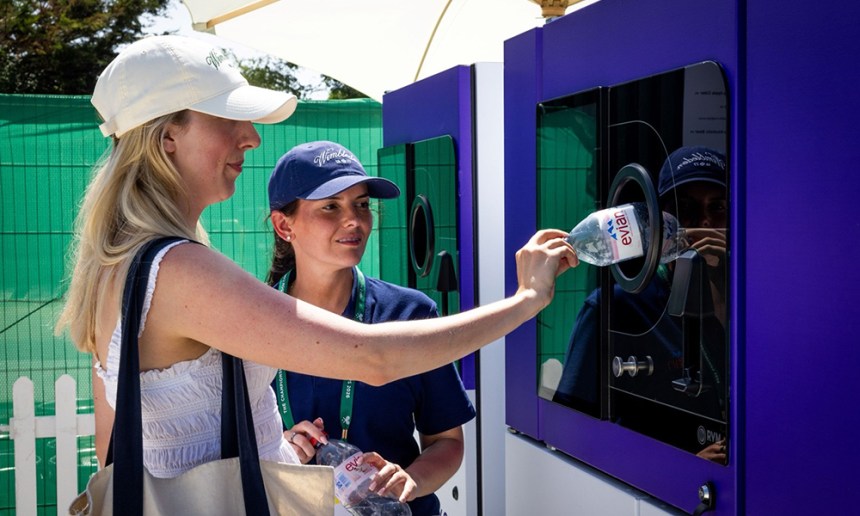
This summer, Danone partnered with the All England Lawn Tennis Club and Exchange for Change to pilot Reverse Vending Machines at this year’s Wimbledon qualifying competition, allowing spectators to experience how the UK DRS will work in practice.

The post 68% of people will return drinks containers during shopping trips, new research finds appeared first on Circular Online.

EU

Theresa Mörsen, Policy Manager at Zero Waste Europe, argues that the EU’s Circular Economy Act must break free from import dependencies and cut down on material use if it wants to spearhead a successful circular transition.

Discussions on the circular economy are heating up in Brussels as the European Commission prepares to publish its proposal for the Circular Economy Act in autumn.

But EU decision-makers risk repeating past mistakes by presenting recycling as a silver bullet to meet material needs and tackle the waste crisis.

Instead, Europe needs more serious strides towards decreasing its import dependency and ensuring resources are used more strategically.

Why the current approach isn’t enough

Theresa Mörsen, Policy Manager at Zero Waste Europe.

The EU imports almost twice as much material by weight as it sends out, and every day, each EU citizen is responsible for 38.6 kg of raw materials extracted from the earth, on average.

To put that into perspective, making the smartphone in your pocket requires mining 10-15kg of ore. The ecological damage is immense: biodiversity loss, pollution, and climate change.

In fact, our current thirst for raw materials makes a comfortable life within planetary boundaries less and less likely for our children and grandchildren.

Much of our material needs come from a persistent throw-away culture. Each year, the EU discards millions of single-use vapes, 16 billion single-use coffee cups, and 5.8 million tonnes of clothing.

These products contain valuable materials from cotton, polyester, and paper, to aluminium, lithium, and cobalt.

While they can be recycled in theory, in practice, collection is insufficient, losses occurring during recycling are inevitable, and many products contain hazardous substances or weren’t designed to be recycled in the first place.

This means that these materials are either burned in an incinerator or buried in a landfill. This is exactly the kind of preventable waste the Circular Economy Act has a chance to address, but only if it goes further than what is currently on the table.

A Circular Economy Act for a secure and innovative Europe

The EU already has an ambitious target to double circularity from 12.2% to 24% by 2030 – set in the Clean Industrial Deal in 2025. But hitting that 24% target requires confronting two issues that remain largely absent from the debate:

  1. Circularity is still not prioritised as a driver of competitiveness and resilience, but rather as a burden for businesses.
  2. The absolute consumption of materials needed for the EU economy is too high to be substituted with circular materials alone.

This is the core gap the upcoming Act has to close: it must address both circularity and the absolute demand for materials while creating new opportunities for businesses.

Reusing and recycling materials is important, but reuse without absolute reduction is like trying to empty a bathtub without turning off the tap; the water level keeps rising, as do the risks for people and planet.

In an increasingly volatile world that frequently sees the disruption of supply chains, using the materials that are already available to us more strategically is what should guide policy-making.

As the European Commission finalises the proposal, we’re calling for the Circular Economy Act to incorporate the following measures:

  • Increasing circularity by prioritising reuse, repair, and refurbishment over recycling to harness the full potential of keeping products in use for as long as possible. Reuse and preparation-for-reuse targets, as well as economic incentives like EPR, can make second-hand products more attractive.
  • Managing demand by swapping single-use items for reusable ones, especially by phasing out short-lived electronic appliances.
  • Introducing measures to tackle the overall material consumption by putting a fair price on the environmental externalities of new materials entering the EU, taking inspiration from existing EU carbon pricing mechanisms (ETS/CBAM).
  • Setting a science-based material footprint target to guide the long-term transition towards a resilient economy and a sustainable level of material use in the EU. In 2024, all Member States called on the Commission to assess such a target. Following the approach taken in the European Climate Law, ambitious and binding targets on primary material use should be supported by concrete policy measures.

The economic advantage of the circular transition

This is not only about saving resources and limiting environmental impacts. The strategic use of materials also paves the way towards a new economy, creating local, circular jobs in reuse, repair, and refurbishment businesses.

Around 4.3 million Europeans already work in the circular sector – that’s more than the entire workforce in Denmark. With the right regulatory support from the Circular Economy Act, it could become the economic engine that powers the transition to a more resilient, competitive, and resourceful European economy.

The post New EU circular economy law risks turning a blind eye to material consumption appeared first on Circular Online.

The world got its first taste of AI with the arrival of ChatGPT in 2021, and everyone became AI users. It was definitely a great time when anyone could use language models and simple chatbots to create poems and stories. Within less than a decade of the introduction of language models, the AI agents manager career path has emerged as the top choice of professionals looking for AI jobs. Do you think it is a good move to become a manager of AI agents in 2026?

  • 33% of companies are in the pilot stages or have a fully operational use case of AI agents (Source).    
  • The World Economic Forum has stated that 40% of employers will reduce their workforce in areas where AI agents ensure task automation (Source). 
  • By 2030, around 45% of organizations will be using AI agents at scale across various business functions (Source). 

As the adoption of AI agents continues to grow, businesses will have to treat them as digital workers. The AI agent manager is responsible for managing the fleet of AI agents of a business and orchestrates the digital workforce. It is not only a lucrative career option for AI professionals but also offers the opportunity to shape the future of artificial intelligence. You must understand the career path of an AI agent manager to step up your preparations for one of the hottest AI jobs now. 

Why is the Demand for AI Agents Manager Growing?

If you think of the AI job market a few years ago, the only big job that comes to mind is that of a prompt engineer. You may have come across many articles and discussions where prompt engineering was painted as the $300k AI job of the future. In the last few years, the AI landscape has been through some significant changes with AI agents being one of the prominent ones. 

The rise in number of postings for AI agent manager jobs serves proof of the growing use of AI agents. It also indicates that AI has shifted from generative AI towards agentic AI or from generating words to digital workers. AI agents don’t wait for your prompts at every step of their workflows and work autonomously to achieve specific goals.

AI agents can use tools, browse the web, gain access to databases, and collaborate with other agents to achieve their objectives. At the same time, it is important to know that autonomy without supervision can ultimately spiral into chaos. AI agent managers ensure that agents stay on track and work as intended without violating any privacy policies or regulations.

Get Certified AI Agents Manager (CAIAM)™ Certified — Gain in-demand skills to manage agentic AI workflows across the full AI agent lifecycle and lead the future of intelligent automation

What Does an AI Agents Manager Do?

The first thing that you must know before pursuing AI agent manager listings on job boards is the job responsibilities. You can prepare for a specific job role with more efficiency when you know what you are preparing for. AI agent managers are responsible for aligning the working of AI agents with business goals. The answers to “What is the role of an AI agent manager?” focus a lot on the fact that it sits at the intersection of AI technology and corporate strategy.

As an AI agent manager, you will have to,

  • Monitor the quality, speed, and behavior of AI agents to monitor their performance while keeping an eye on escalation rates.
  • Decide when the AI agents will act alone or work in collaboration with humans or handoff the task completely to humans.
  • Make adjustments in how AI agents handle different tasks, primarily by refining prompts and optimizing workflows on the basis of feedback.
  • Find out why an AI agent failed with root-cause analysis and resolve the underlying issue. 
  • Calculate the business value delivered by AI agents in numbers to draw a quantitative impression of their performance and value.

You can see clearly that the AI agent manager role is significantly different from traditional product managers in many ways. Traditional product management thrives when you can predict how features will behave, and you can define product requirements precisely. AI agents work on a completely different level, and with the level of autonomy they have, you will need a special set of skills to manage them.

Enroll now in the Mastering Generative AI with LLMs Course to discover the different ways of using generative AI models to solve real-world problems.

Which Skills Do You Need to Become an AI Agent Manager?

The job description of an AI agent manager may have led you to think about skills required for the job. Many of you may have also assumed that you need the skills of experienced IT administrators and data scientists for the role. On the contrary, you can choose any AI agent manager course from a credible platform and acquire the relevant skills. If you want to become one of the most successful AI agent managers, then you should invest efforts in learning specific skills.

  • Context Engineering

AI agent managers design context systems that help AI agents in understanding situations and retaining memory across different interactions. As a result, AI agents can adapt their behavior according to the context rather than working as mindless bots. You must know how to craft information architectures that not only store data but also facilitate intelligent decision-making.  

  • Advanced Prompt Engineering

You will have to move beyond the basic prompt engineering techniques to become AI agent managers. As an AI agent manager, you will be expected to know about systematic optimization techniques and automated improvement processes. Professionals aspiring to become AI agent managers must know how prompt architecture works and the best practices for systematic performance improvement. 

  • Agentic Orchestration

The primary work of AI agents manager revolves around orchestrating networks of AI agents. You must know how to design workflows in which multiple agents can work in collaboration, transfer tasks, and manage conflicts without consistent human involvement. AI agent managers should not only understand the technical capabilities of AI agents but also the behaviors resulting from agent interactions.

  • Systems Thinking 

The agent manager has to work with numerous AI agents and ensure that all of them work as intended. Therefore, the AI agent manager must have the capability to visualize the interactions between different agents. You must try to understand how the output of one agent serves as the input of another and how they handoff tasks. Small changes in how an agent handles exceptions will have significant impact on what another agent does with the data they receive. AI agent managers should know how to approach agentic AI as a broader system rather than focusing on individual agent functionalities.

  • Business Acumen

You cannot think about becoming an effective AI agent manager with technical skills alone. What use are your skills as an AI agent manager when you don’t know the right context to apply them? The best AI agent managers are the ones who know and understand the business processes that should be automated. Understanding the business side of agentic AI is as important as the technical aspects, especially when you have to become an invaluable asset for employers.

  • Soft Skills

The most crucial skill requirement for AI agent manager jobs will obviously draw attention towards soft skills. What are the must-have soft skills for someone who has to manage AI agents? Even while working with AI agents, you must have the ability for critical thinking and clear communication. On top of it, you should also be adaptable to change and prepare for constant iteration without waiting for the perfect conditions.

Discover the AI for Everyone Course and learn AI, Generative AI, ChatGPT, AI ethics, and real-world business applications.

Final Thoughts 

The biggest career option in AI right now is that of an AI agent manager, a role which has come under the limelight with growing use of agentic AI. You can prepare for AI agent manager roles without advanced technical expertise or data science skills. On the contrary, you can think of AI agent manager as a revised product manager role in the AI space. As an AI agent manager, you can play a major role in leading the digital workforce in future. With the right training courses and certification programs, you can acquire the relevant skills and become successful AI agent managers. Learn more about agentic AI and discover why it is the future of artificial intelligence

The post The Rise of AI Agents Managers in the Enterprise Era appeared first on 101 Blockchains.

About Sherri Prettyman

Full Name: Sherri Prettyman

Designation: Director of Professional and Marketplace Engagement

Company: Amgen

Country: United States

Sherri’s Learning Journey That Inspires

Which certification program did you complete on the 101 Blockchains platform?

I have completed the Certified Enterprise Blockchain Professional (CEBP)™ certification program with the 101 Blockchains platform. 

What exactly made you pick 101 Blockchains and how would you describe your learning experience?

The first thing that made me choose 101 Blockchains is the design of their learning materials. I found them easy to understand, and the way they maintain continuity across all chapters helps you remember key points with minimal efforts. I had a really enjoyable learning experience with the 101 Blockchains platform.

At 101 Blockchains, you don’t just earn certifications — you gain real-world skills that shape you into a confident blockchain professional.

Which skill do you think has helped you the most?

The 101 Blockchains platform helped me learn the skill to explain blockchain technology to anyone, including people without any technical knowledge. I can now help others understand blockchain, an ability that has helped me the most. On top of it, I have also learned about permissioned blockchains and figured out why they are important to businesses that demand more privacy.

How has the 101 Blockchains platform supported your professional growth?

Once I had completed the certification course on 101 Blockchains platform, I had a clear and in-depth understanding of how organizations can use blockchain applications. Most important of all, the course also helped me understand the essential steps required to translate blockchain ideals into real and actionable solutions.

From learners to leaders — explore the success stories of 100,000+ professionals with 101 Blockchains.

What is your advice for people who want a career in blockchain?

You must start your learning journey with 101 Blockchains, as it will help you learn how to implement your skills and ideas in action.

Why would you recommend 101 Blockchains to other learners?

The 101 Blockchains platform offers helpful analogies in their courses, and it is easier to understand the material without prior coding experience. Most important of all, the objective of every learning resource on the platform is to help you learn about the real business applications of blockchain. 

Advance your Career with Blockchain & Web3 Skills

The post Success Story: Sherri Prettyman’s Learning Journey with 101 Blockchains appeared first on 101 Blockchains.