Chris McDonald MP cutting the ribbon at the opening of Birmingham’s rare earth magnet recycling facility.
The University of Birmingham has launched a new facility for separating and recycling rare earth magnets.
The facility in the West Midlands uses a hydrogen-based process developed by researchers at the University of Birmingham and aims to scale the process to commercial production levels.
Hydrogen Processing of Magnet Scrap (HPMS) technology is able to extract rare earth magnets from end-of-life products without the need to fully disassemble them.
Minister for Industry Chris McDonald MP, who opened the facility at Tyseley Energy Park in Birmingham, said: “This new facility is great news for the West Midlands, which will help create hundreds of well-paid local jobs and is testament to our world-leading expertise in rare earth recycling.”
“This is our Critical Minerals Strategy in action, bringing sintered magnet manufacturing back to the UK for the first time in 25 years and backing innovative projects to boost our critical minerals supply chains and power the green industries of the future.”
The recycling facility has been funded with £4.5 million by Innovate UK’s Driving the Electric Industrialisation Centres (DER-IC) with supporting grants via the Innovate Climates Programme, EPSRC, the Advanced Propulsion Centre, and EU Horizon grants.
Commenting on the opening, Professor Rachel O’Reilly MBE FRS FRSC, Pro-Vice Chancellor (Research) at the University of Birmingham, said: “By developing complete circular solutions for the supply of critical minerals such as those found in rare earth magnets, the University of Birmingham is playing an essential role in helping the UK become a technological leader in this field.”
Scientists working on safe, biodegradable alternatives to plastics made from agricultural waste awarded £500,000 2026 Hill Prize in Physical Sciences.
Teysha Technologies and Texas A&M University, Dr. Karen Wooley and Matthew Stone, along with team members Dr. Senthil Kumar Boopathi and Dr. Ashlee Jahnke, received the award for a joint venture to develop biodegradable alternatives to plastics.
Wooley and Stone were recognised for their patent-pending polymer chemistry, which converts plant-derived sugars and natural phenolic compounds into high-performance alternatives to bisphenol A (BPA).
The materials are engineered to match or exceed the durability and functionality of conventional plastics, while safely degrading at end of life, with the aim of eliminating long-term environmental and human health risks.
The Hill Prize awards early-stage scientific research with strong societal impact. It provides $500,000 in non-dilutive funding to accelerate the translation of breakthrough science into real-world applications.
Dr. Karen Wooley, Chief Technology Officer of Teysha Technologies and Distinguished Professor and W. T. Doherty-Welch Chair in Chemistry at Texas A&M University, commented: “This funding allows us to accelerate the transition from university lab-scale innovation to materials that can be adopted by industry, without sacrificing performance or safety.”
Stone founded the materials company Teysha Technologies, which has developed a biopolymer platform with the aim of producing commercially viable materials validated across packaging, cosmetics, 3D printing and durable goods.
In 2025, Teysha Technologies says materials it produced were tested during a world-record Mount Everest expedition, withstanding temperatures below –40°C, extreme UV exposure and prolonged mechanical stress.
Matthew Stone, CEO and Founder of Teysha Technologies, said: “This award validates the idea that sustainable materials must work within existing industrial systems.”
“With the Hill Prize, we can scale KarmaCane faster and support partners who are actively looking to replace toxic plastics with practical, high-performance alternatives.”
This meant that Scotland could not include glass in its DRS. Following the decision, the former Scottish Greens co-leader Lorna Slater accused the UK government of sabotage.
Waste management company Biffa claimed a letter from Slater in 2022 was akin to a guarantee that the DRS would go ahead and prompted them to invest millions in the scheme.
Judge Lord Sandison rejected the firm’s argument and called Biffa’s interpretation of the letter ‘wishful thinking’.
A Biffa spokesperson said the company are reviewing its position with its legal advisors.
The Scottish government said it could not comment on ongoing legal proceedings.
Biffa was the DRS’s official logistics service provider and had invested over £65 million in preparation for the scheme before it was delayed.
Scotland is now set to launch its DRS scheme in October 2027 alongside the other UK nations, without glass as an in-scope material.
Last year, Wales threatened to scrap its DRS if the UK Government didn’t grant an exclusion from the UKIM Act to allow it to include glass in its scheme.
Wales plans to include glass as an in-scope material in its DRS at launch without charging a deposit on any glass containers. In a statement, the Deputy First Minister for Wales said this was a transitional measure to manage interoperability with the other UK schemes.
The Welsh Government said a phased approach would avoid the ‘significant risks and impacts’ of DRSs being implemented within the other nations but not in Wales.
Why did you choose this program, and how was your overall learning experience with 101 Blockchains?
Operating at the intersection of industry and academia, I required a curriculum that could satisfy rigorous architectural standards while addressing practical enterprise demands. With over 9 years of experience in financial systems and currently pursuing a PhD in Information Systems Engineering & Management, I needed a program that moved beyond hype. 101 Blockchains provided that balance, offering a structured approach to DLT that complements my doctoral research.
At 101 Blockchains, you don’t just earn certifications — you gain real-world skills that shape you into a confident blockchain professional.
What skills or knowledge did you gain that helped you most?
The program acted as a conceptual bridge between my work with traditional payment rails and decentralized networks. The architectural frameworks were instrumental to my current research on mapping legacy systems to blockchain, giving me the technical depth to design viable migration paths for complex enterprise environments.
How has this program contributed to your professional growth?
It has become a cornerstone in my professional development toward becoming a Distinguished Engineer. The certification has strengthened my authority as a Full Stack Consultant while providing the necessary scaffolding for my dissertation work on future-ready financial infrastructures.
What advice would you give to someone considering a career in blockchain?
Treat this certification as the “backbone” of your career. Regardless of your tenure in the industry, starting from a verified baseline is essential. It provides the structural knowledge required to navigate the complexities of this evolving field.
Would you recommend 101 Blockchains to others? Why?
Absolutely. While my roots are in Fintech, this education is vital for anyone interested in building futuristic architectures in any domain. Whether you are a developer or a researcher, this program provides the blueprint for designing the next generation of resilient, decentralized systems.
Artificial intelligence has taken the world by storm, transforming many industries with groundbreaking, innovative AI applications. If you want to hop on the bandwagon, you can take on the responsibility of security of AI systems and applications in the industry of your choice as an AI security expert. We are proud to announce that the new accredited Certified AI Security Expert (CAISE) certification launched by 101 Blockchains will help you become a leader in AI security. The new certification course has been tailored to transform you into a valuable asset for employers seeking the best ways to combat AI security risks.
We have introduced the world’s first accredited certification on AI security, so we can offer aspiring professionals like you an opportunity to explore career paths in AI security and accelerate your career. This certification course not only empowers you with theoretical knowledge but also provides you with practical experience in real-world projects in AI security. Let us share the most important details of the new certification course and how it can boost your career in artificial intelligence.
Unlock 60+ expert-led courses, accredited certifications, and exclusive resources — all with the 101 Blockchains Premium Plan. Upskill faster. Get certified. Move ahead.
The Certified AI Security Expert (CAISE) Certification Course
We at 101 Blockchains believe that the future of AI adoption depends significantly on how organizations address the security risks for AI applications and systems. Cyber-attacks powered by AI increased by 72% in 2025 and led to an estimated cost burden of $30 billion (Source). The new AI security certification was launched to help you understand the security risks that are prevalent in the AI landscape and the best practices to resolve them. It is important to understand the fundamentals of AI security with considerable depth and discover how AI security works in different industries in order to become a true AI expert.
The Certified AI Security Expert (CAISE) certification course is accredited by CPD Certification Service, UK. You will get 16 hours of CPD credit when you successfully complete the certification program. The accreditation ensures that you can showcase quantifiable proof of the efforts you have invested in continuous professional development. The CPD credits also show your commitment to learning about AI security and your dedication to pursuing a career in an emerging field.
The CAISE certification course will not only shed light on the fundamental concepts of AI security but also dive deeper into adversarial machine learning. You will also find lessons on prompt injections, LLM security, AI security controls, and general defense mechanisms. Learners will also familiarize themselves with best practices for compliance, governance, and risk management in AI. The certification also covers lessons on use cases of AI security in different industries. Most importantly, the certification offers an opportunity to work on a capstone project in AI security, so you gain actual practical experience in AI security.
Advance your career with the Certified AI Security Expert (CAISE) certification—master LLM security, adversarial machine learning, and advanced AI defense mechanisms to combat real-world AI risks with confidence.
Unraveling the Benefits of an Accredited Certification in AI Security
Many of you might be wondering about the reason to focus on the ‘accredited’ term with our new certification course. The new accredited AI security certification program not only brings the mark of credibility from a trusted credential service provider but also many other advantages.
Compliance with the Highest Standards
As an accredited certification, the Certified AI Security Expert (CAISE) course has to follow some strict standards to obtain accreditation. You choose the best quality of learning experience when you pick an accredited certification course.
Enhanced Visibility in Job Markets
The next crucial advantage of choosing our accredited certification for AI security is the assurance of better recognition in job markets. Accredited certifications present you as a valuable asset for employers, thereby increasing your chances of hiring.
Avoiding Risks of Losing Credibility
Our new accredited certification in AI security helps you become a certified AI security expert with an infallible mark of credibility. The strict evaluation of the certification course by a third-party provider ensures that it does not spread misinformation and empowers you with valuable skills.
Target Audience for the Certified AI Security Expert (CAISE) Certification Course
We have created the new certification course on AI security to help everyone become a specialist in AI security. You can find answers to “How to become an AI security specialist?” as you learn all the essential skills required to become a trusted expert in the implementation of AI security practices. We offer significant learning outcomes for different groups of learners and prepare them for emerging career paths in AI.
Professionals who want to build a career as a trusted AI security expert can learn how to safeguard AI systems and prevent adversarial attacks.
Data scientists and AI practitioners can learn the best practices to protect LLMs, AI pipelines, and machine learning models.
Business analysts and consultants can enhance their knowledge of enterprise AI adoption, strategic best practices for AI security, and compliance.
Software developers and engineers should use the certification course to earn hands-on experience in AI security tools and defense controls.
Basic Information about the Certified AI Security Expert (CAISE) Certification Course
Awareness of the basic information about our new accredited certification program on AI security will offer a better idea of its benefits for your career. The learning objectives of the Certified AI Security Professional certification launched on 101 Blockchains, showcase what you can gain from it.
Developing comprehensive knowledge of LLM security, advanced AI security mechanisms, and adversarial machine learning.
Enhance your awareness of the best practices to integrate security controls, implement governance frameworks, and visualize robust workflows.
Become a leader in AI security with practical fluency in global regulations, responsible AI practices, and AI risk management.
Our new accredited certification in AI security aims to offer a comprehensive resource that helps you become an AI security leader. The different modules in the certification course offer a strategic roadmap to acquire AI security skills. The lessons covered in the AI security certification course will demonstrate why it is the best resource to specialize in AI security.
Fundamental concepts of cybersecurity and artificial intelligence
The basics of AI security
Introduction to adversarial machine learning
Working of prompt injection and LLM security
AI security controls and general defense mechanisms
Risk management, governance, and compliance best practices in AI
Applications and use cases of AI in various industries
Advanced concepts of AI security and capstone project
Top Reasons to Choose the Certified AI Security Expert (CAISE) Certification Course
The Certified AI Security Expert (CAISE) certification offers a significant boost to the career aspirations of professionals working with AI. It provides many other benefits for anyone who wants to explore new career paths in AI security.
Accredited Certification
The most important benefit of the new Certified AI Security Expert (CAISE) certification launched on our platform is the accreditation. It not only enhances your credibility as a certified AI security professional but also increases your visibility in job markets.
Learning from Experts
The Certified AI Security Expert (CAISE) certification course offers an opportunity to learn under qualified instructors with years of industry experience. You can gain a lot of experience from the valuable insights offered by our instructors from their professional expertise.
Hands-on Learning
Another notable benefit of choosing our accredited certification program for AI security is the practical learning experience. You will not only learn theoretical concepts but also work on a real-world project to test your AI security skills and prepare you for the AI job market. The certification aims to make every learner acquire job-ready skills with hands-on exercises.
Highly Responsive Support
101 Blockchains offers the assurance of round-the-clock support to every learner with the CAISE certification course. We ensure that learners don’t have to wait for answers to their queries arising from the course and have any technical issues resolved within minutes.
Power up your career with AI, ML & ChatGPT — unlock the full AI library and earn the CAISE certification with the AI Pro Plan.
Final Thoughts
Our new accredited Certified AI Security Expert (CAISE) certification course offers a unique opportunity for everyone who wants to explore a new career path in AI. The certification program includes the unique advantage of credibility with accreditation from a renowned accreditation service provider. In addition, the hands-on experience you will gain from the course will empower you with skills you can use on the job. Learn more about the certification course and how it can help you build a successful career in AI.
PackUK has appointed members to the Scheme Administrator Steering Group, completing the appointment of all four of its key advisory groups.
PackUk, the scheme administrator for the UK’s Extended Producer Responsibility for packaging (pEPR) programme, also appointed Independent Chairs for all four groups.
The voluntary advisory groups, which are not decision-making bodies, will support the continued development and delivery of the pEPR scheme. The groups are:
Efficiency and Effectiveness Technical Advisory Committee.
Communications and Behaviour Change Advisory Group.
The Scheme Administrator Steering Group provides recommendations to the Scheme Administrator Executive Committee (SA ExCo) on the operational functions of the Scheme Administrator.
With the exception of the local authority representatives, all individuals are appointed as individuals, rather than on behalf of businesses or organisations.
Who has been appointed?
Producer organisations and trade association representatives include Alison Bramfitt, Cat Hay, Gareth Callan, James Bull, John Ryan, Kevin Laughton, Paul Vanston, and Steve Carpenter.
Compliance schemes are represented by Robbie Staniforth, waste management organisations by Emma Beal and Stuart Hayward-Higham, and non-government organisations by Claire Shrewsbury and Paula Chin.
Local authority representatives include Andrew Cassells (Northern Ireland), Craig Mitchell (Wales), Silke Isbrand (Scotland), and Steve Palfrey (England).
Sebastian Munden has been appointed Chair of the Steering Group, while James Bull has been appointed Deputy Chair.
Emma Wilkinson has been elected Chair of the Recyclability Assessment Methodology Technical Advisory Committee (RAM TAC).
Cathy Cook has been elected Chair of the Efficiency and Effectiveness Technical Advisory Committee (E&E TAC).
Paul Vanston has been elected Chair of the Communications and Behaviour Change Advisory Group (CBCAG).
eBay is expanding its Circular Fashion Fund in 2026 to applications from businesses and startups across the EU, Switzerland, and Canada for the first time.
Eight selected businesses will receive $50,000 in funding, alongside mentoring to develop solutions that extend the life of clothing and reduce textile waste.
The annual programme, first launched in 2022, aims to support entrepreneurs tackling the fashion and textile industry’s environmental footprint.
One business will also be named the Global Winner of the Circular Fashion Fund and have the opportunity to receive an additional $300,000 investment from eBay Ventures.
With this expansion, eBay’s total global funding through the programme is set to reach $1.9 million by the end of 2026.
Alongside expanding into new markets for this year, the Circular Fashion Fund already accepts applications from the UK, Germany, Australia, and the U.S. Applications for 2026 are now open for all markets until March 8, 2026.
Since 2022, eBay says its Circular Fashion Fund has invested in and provided mentoring to over 25 businesses.
Alexis Hoopes, vice president and global head of fashion at eBay, commented: “When we launched the Circular Fashion Fund, we set out to support the businesses turning circularity from ambition into action.”
“Over the past three years, we’ve seen scalable solutions emerge in areas like textile recycling, resale and repair – but these businesses need capital and support to grow. With this expansion, we’re helping more founders build the infrastructure to make circular fashion an integral part of the fashion industry.”
Triinu La Caille, FCIWM CMgr FCMI, Head of Compliance & Sustainability, explores why compliance teams are the missing – and often overlooked – link in the circular economy.
We discuss technology and targets, but the UK will not achieve a truly circular economy without compliance teams shaping how materials are actually managed, tracked, and repurposed as products.
I keep meeting organisations that want circular outcomes, but treat compliance like an afterthought. Procurement hunts for recycled content, operations chase diversion rates, and marketing wants a great case study.
Who owns the messy middle, the bit where waste becomes a resource without breaking the law or the chain of custody? That is the compliance team’s lane; when it is empty, circular ambitions stall.
The legal line that changes everything
Once something is ‘waste’, you are in a different world. POPs (persistent organic pollutants) rules are a good reality check. If waste contains POPs, you cannot reuse or recycle that waste; the POPs must be destroyed. That is not optional; it is the law.
Triinu La Caille, FCIWM CMgr FCMI, Head of Compliance & Sustainability.
Electronics make this concrete. WEEE (Waste Electronic and Electrical Equipment) that is POPs waste must not be prepared for reuse, repaired, or refurbished for reuse. The exceptions carve-out is narrow; only items manufactured on or after 1 January 2009 can be reused within the UK, and only where you can evidence the other conditions.
Otherwise, POPs must be destroyed. In practice, plastic casings, printed circuit boards and cables are common POPs hotspots, so reuse routes close quickly the moment a device becomes waste.
This is exactly where a capable compliance function earns its keep. If reuse is the goal, they help teams design pre-waste pathways. For example, tested post-consumer WEEE that never enters the waste regime, with proper evidence and warranties.
If an item is already waste, they steer it into fully compliant destruction or POPs-safe treatment. It is not glamorous, but it is what keeps circular efforts legal and defensible.
End-of-waste, still harder than it should be
Another reason compliance feels like friction is that the UK’s end-of-waste test is still a confidence game. Operators have to show that a material is produced by a defined process, meets a product standard, and can be used directly like a virgin equivalent.
That is doable, but often slow and uncertain, which nudges businesses toward disposal or low-grade outlets. CIWM (The Chartered Institution of Wastes Management) has argued for a refresh, including clearer, sector-specific criteria to speed up circular markets. I agree. Clearer end-of-waste rules would make compliance faster, not looser.
Data is finally catching up with our promises
Two policy shifts will make or break circular credibility over the next few years. First, Digital Waste Tracking (DWT).
From April 2025, more organisations began onboarding, and from October 2026, receiving sites in England must use the service. That means near-real-time waste data across carriers, transfer stations and end plants. Good compliance teams will use this to prove claims, spot leakage, and close loops with evidence, not anecdotes.
Second, Simpler Recycling. Businesses in England with 10 or more employees must have been separating core recyclable streams and food waste since 31 March 2025, with micro-firms following by 31 March 2027.
For households, local authorities must collect the core materials, with weekly food waste, from 31 March 2026, subject to transitional arrangements. Again, compliance will translate these dates into contracts, site instructions and audits that stick.
Carbon costs are arriving at the back door
The UK ETS (Emissions Trading Scheme) is expanding to cover waste incineration and energy-from-waste (EfW), with a voluntary monitoring, reporting and verification period starting 1 January 2026, and the government signalling full inclusion from 2028 in its consultation package and interim responses.
Whether dates shift or not, the direction of travel is clear: residual disposal will carry a carbon price. Smart compliance people are already stress-testing contracts and modelling cost exposure so businesses do not get caught out.
Waste crime, traceability and why paperwork is climate action
Circularity runs on trust. If you cannot show where the material went, you cannot credibly claim it displaced virgin production. Waste crime eats away at that trust, with official surveys suggesting almost a fifth of waste is illegally managed, with the economic hit sitting around a one billion pounds a year in England.
The scale looks worse the more we look. Recent reporting points to thousands of illegal sites across the UK, with high-profile cases like Hoad’s Wood in Kent and a growing cluster in Oxfordshire and Wigan, and the Environment Agency confirming it closed 743 illegal sites in 2024 to 2025, with many more remaining open.
Parliament has started to say the quiet part out loud. The House of Lords Environment and Climate Change Committee found waste crime is critically under-prioritised, flagged multiple failures at the Environment Agency and the ineffectiveness of the Joint Unit for Waste Crime, and called for an independent review. Ministers have pushed back on a new review for now, which the Committee described as complacent.
So yes, the regulator is working, and often under tough constraints, but it is not consistently the compliance machine the system needs right now. That is a signal to businesses. You cannot outsource assurance to enforcement.
Compliance teams inside operators and clients need to step up, build clean chains of evidence, verify end destinations, use digital waste tracking as it rolls out, and make routine due diligence a habit.
It looks like paperwork. In practice, it keeps material in legal routes, shuts the door on the cheap illegal option, and makes your climate claims defensible.
The people gap that nobody budgets for
Here is the awkward part. Many organisations, especially SMEs, have thin or no in-house compliance capacity. Surveys have long shown low awareness of Duty of Care and weak internal controls across UK businesses. Add new rules on POPs, digital tracking and carbon, and you get a widening skills gap.
CIWM’s 2023 skills report estimated more than 74,000 new roles required by 2030, rising to roughly 239,000 by 2040 across collection, reuse, design, regulation, communications and more. That is a big ask without a plan.
Recruiters are also saying the quiet part out loud as well. John Tilbrook, Managing Director at Newman Stewart, recently called on senior leaders to treat green workforce planning as strategic, not administrative, with cross-functional, data-literate roles that can actually run a circular system. That resonates with what I see: the bottleneck is often people, not technology.
So what does ‘compliance as an enabler’ look like in practice?
Here is the playbook I wish more organisations used.
Design pre-waste routes for reuse – If you want to reuse, keep qualified products as products. Build tested used EEE channels, warranty packs, serialised records, and commercial terms that avoid tipping items into WEEE. Do that with compliance in the room, not after the fact.
Know your POPs hotspots – Map where POPs could appear in your portfolio, for example, seating foams, plastic casings, certain cables, and set default routes accordingly. If it is POPs waste, do not pretend it is not; specify destruction with the right evidence.
Make end-of-waste your product brief – Treat quality specs, contamination limits and customer acceptance criteria as a product management task. The clearer the spec, the cleaner the audit trail, the quicker the upgrade from waste to product. Push for clearer national criteria through your trade bodies.
Upgrade your data spine before the deadlines – Prepare for Digital Waste Tracking and Simpler Recycling by aligning site codes, carriers, EWC codes and end-destination contracts now. Build dashboards that show not just tonnages, but legal routes and evidence status.
Model the cost of carbon on residuals – Whether UK ETS lands in 2028 or a touch later, plan for it. Build carbon exposure into T&Cs, explore contracts that reward higher capture of recyclables, and scrutinise EfW heat offtake options to reduce risk.
Invest in people like you mean it – Build or buy capability in environmental law, data management, product standards and supply-chain assurance. The job market is tight. Upskill the teams you have, and recruit for the blend of policy literacy and operational nous that circular systems need.
Final thought
We do not get a circular economy by wishing materials back into products. We get there by running clean, auditable pathways through a pretty demanding rulebook, and celebrating the people who make that possible.
Put compliance in the centre of the room, give them the tools and the headcount, and the loops start to close.
Duncan Midwood, CEO of DDRS Alliance, analyses the latest developments around an aligned deposit return scheme across all four UK nations.
The UK Government has committed to launching a deposit return scheme (DRS) in England and Northern Ireland in October 2027, and the Scottish Government are following that lead. The Welsh Government, too, has undertaken to match that timeline to launch its version of a DRS.
So that’s all great – all four UK countries fully aligned. If only that were true! They are aligned on timings (sort of), but not on scope – and that is where the root of all the confusion and frustration lies.
Despite strong public support across all four UK nations for the inclusion of glass bottles in a UK DRS, the UK Government decided to drop glass from the DRS scope in England and Northern Ireland.
The Scottish Government, having had a torrid time trying to stick to their guns by keeping glass in scope and currently being sued for millions by Biffa around the collapse of the Scottish scheme, has relented and agreed to follow the UK Government by excluding glass. As a result, the scope of the DRS for England, N. Ireland and Scotland only covers PET bottles and metal cans.
In Wales, where collection and recycling performance far exceeds that elsewhere in the UK, there is a determination to make more of the recycling revolution that a national DRS launch will bring. The Welsh Government is determined to include glass in its DRS and, as a further goal, plans to launch a re-use framework alongside the DRS launch.
Many stakeholders agree that having different DRS systems and rules within the UK is a recipe for confusion, fraud and, ultimately, failure to create the step-change needed in circularity.
The Welsh Government, for their part, have agreed to align with the rest of the UK on PET bottles and metal cans – in approach and timings. But they are holding tight to their desire to include glass and re-use. They would argue that they have done their bit to support a UK solution, and are expecting (or hoping) that the rest of the UK reciprocates and supports the Welsh ambitions.
And to bring everything right up to date, the UK DMO (deposit management organisation) has been appointed, is building its team and recently moved into its new premises in Milton Keynes. They are busy now putting all the plans in place for an October 2027 DRS launch.
The Welsh Government are currently inviting tenders for the Welsh DMO, which is widely expected to be awarded to UK DMO. They also recently submitted their draft legislation to the WTO – a required step in the establishment of a national DRS.
So, with all this activity and shared determination to launch a DRS across the UK, what could possibly go wrong? Well, in short: politics!
What’s gone wrong?
Wales has confirmed it will include glass as an in-scope material in its deposit return scheme at launch but no deposit will be charged on any glass containers.
When the Scottish Government showed equal determination to launch its own scheme (originally in April 2021), the UK Government used the UK Internal Market Act 2020 (IMA) to try to force the Scottish Government to remove glass from scope. In the end, the Scottish Government were forced to cave, and their DRS plans were shelved.
Of course, there now exists a possibility that the UK Government will repeat their sledgehammer tactic on Wales to force the Welsh Government to drop its aspirations to include glass and re-use, using the IMA.
But the Welsh Government is determined and, in December, the Deputy First Minister and Cabinet Secretary for Climate Change and Rural Affairs, Huw Irranca-Davies, declared that, should the UK Government not grant an IMA exemption to enable the inclusion of glass and re-use in the Welsh DRS, then the DRS project will be dropped in Wales.
This means that England, Scotland and Northern Ireland would have to gain an exemption from the IMA in order to introduce their own DRS! Essentially, Wales is threatening to turn the very weapon the UK used to get its way in Scotland back onto the UK Government. This, of course, could result in the whole idea of a DRS for the UK being scrapped – or at least shelved for the foreseeable future!
So, you might think that this whole sorry story couldn’t get any worse. But no – not quite!
In the Welsh draft DRS legislation, although the introduction of glass in its DRS is planned to launch alongside plastic and cans, glass has two key exemptions:
Glass bottles will not carry any deposit for a planned three years from launch (so not until 2030), and;
Glass bottles will not require any special labelling until the same 2030 date.
Essentially, what this means is that glass bottles will be part of a DRS in name only. Yes, it is true that retailers will be compelled to take glass bottles back from the public, but they will not be required to pay any deposit back (as none got paid in the first place).
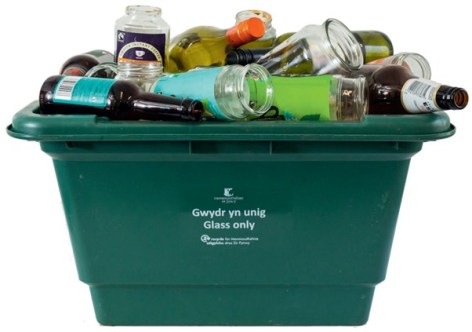
Practically, a retailer can provide a bin in their car park for customers to deposit their bottles for recycling, and the DMO will have to provide a logistics solution to collect the glass. This is what we once knew as a bottle bank!
So, as currently drafted, retailers in Wales will have to provide some form of infrastructure to collect glass bottles, the DMO will have to set up a service to collect the glass, all while the public will have no incentive to do anything different from what they do today – which is put their glass bottles out for the local authorities to collect from the kerbside!
Not surprisingly, DDRS Alliance believes that digital DRS can at least alleviate some of this pain, put glass in a much better place (from a consumer perspective), reduce costs and drive increased recycling more effectively. The Alliance believes that glass bottle collections should remain at kerbside – after all, that is what consumers tell us they would prefer!
It believes that retailers should NOT be compelled to take glass back, and that kerbside returns should suffice for any interim period before a deposit is charged on glass bottles. However, this would require a small modification in the current Welsh DRS draft legislation.
Today’s world has become very uncertain, costs are spiralling for the consumer, and there is political debate around the virtues, affordability and necessity of circularity initiatives. Clear thinking is needed, and pragmatism should rule commercial gain.
If glass should be included in a DRS in the UK (and the public strongly believes it should), then it should be done in a way that makes it easy for the consumer and delivers the optimum recycling performance.
Maybe Wales has the track record and ambition to make glass work, even if the rest of the UK is content to lag behind. Maybe Wales should continue to be the pioneer in sustainability, and the rest of the UK should see them as providing this valuable service, instead of trying to tie everyone down to the lowest common denominator.
Clear thinking – that’s what’s needed. Clear as glass! Let’s find the solutions to simplify the situation that is, right now, as clear as mud!
A new EU-funded project has been launched to develop a deposit return scheme (DRS) for post-consumer textiles across Europe.
The DRS project, known as TexMat, will reward consumers for returning reusable and recyclable items, while notifying producers when discarded textiles require waste management.
As part of the DRS, automated collection containers will sort items by assessing their quality and capturing information about the materials through digital product passports, which are set to be introduced across the EU.
The initiative is funded by a €6 million investment from the European Union’s Horizon Europe research and innovation programme.
Pilot activities in Finland and Spain are set to launch to test the system in real-world settings.
Elina Ilén, TexMat Project Leader at VTT Technical Research Centre of Finland, commented: “TexMat solution has great potential to transform the collection and resale of used but still valuable garments, supporting second-hand markets while enabling consumers to monetise their textiles.”
“Automated collection and sorting will also support textile waste management operators by quickly and accurately separating garments suitable for reuse from those destined for disposal, reducing reliance on manual work.”
The initiative, which runs until March 2029, brings together 14 partners from seven EU countries. This includes researchers and academics from various universities and industry partners who cover the full textile value chain.
The Estonian company Protex Balti is collaborating on integrating a digital product passport into garments. While the Spanish companies Rovimatica and STAM SRL, and the Italian company IRIS Technology Solutions are working together to develop the smart container and related digital tools.