Month: January 2026

News updates written by CIWM’s commercial partners.

Greyparrot
Greyparrot gathers global waste leaders to help MRF operators plan for a profitable 2026
Beyondly
Case Study: Empowering Tradelinens on their B Corp Journey
Probe Industries
Probe Industries launches market-first odour enhancement technology to help industrial facilities reduce odour complaints and improve on-site wellbeing
CONTENUR
CONTENUR supports the transformation of Inverness Castle with discreet underground waste solutions
Rubbermaid Commercial Products
Rubbermaid Commercial Products launches new range of stylish yet functional solutions for small spaces
CRJ Services
Specialist NPORS Training for Waste, Recycling & Forestry Machinery
Vision Techniques
Vision Techniques revamp best-selling product reflecting the changing needs of modern fleets
Dennis Eagle
Dennis Eagle and Terberg Matec UK’s Sales and Aftermarket teams have integrated

Greyparrot | Greyparrot gathers global waste leaders to help MRF operators plan for a profitable 2026

As margins continue to tighten, the UK’s material recovery facilities (MRFs) are under pressure to do more with the material and machinery they already have.

Faced with rising gate fees, the approach of DRS and Simpler Recycling, and fluctuating commodity prices, AI automation has emerged as a survival tool. Before deploying waste intelligence systems, many operators still need to distinguish AI hype from use-cases that actually increase margins.

An upcoming Greyparrot webinar brings together global facility operators and technical experts to focus on practical changes and proven impact. Leaders that already use waste intelligence technology will share what AI has changed, what remains the same, and how the technology factors into their strategies for 2026.

Running a profitable MRF in 2026: What AI really changes – and what it doesn’t takes place on Thursday 12 February 2026 at 14:00 GMT, and registration is now open.

How facility operators actually use AI

Instead of focusing on future promise, the discussion will centre on real-world experience from organisations that have already embedded AI waste analytics in their operations. Greyparrot says it chose its panel to provide global context for the challenges facing British recyclers.

Speakers include experts from KSI Recycling, GreenTech and USA Waste & Recycling. While each applies AI to different regulatory contexts, waste streams and commercial targets, all share a focus on profitability and efficiency.

The session will be hosted by Greyparrot’s Matthew Steventon, who is embedded in the UK’s waste sector and has helped facilities across the country to determine practical use-cases for AI waste analytics. Steventon will draw out the tangible value that AI has delivered for each operator, and find out where human expertise is irreplaceable.

Revealing the strategy behind the headlines

Waste intelligence technology made headlines for increasing both recovery rates and revenue in 2025. Speakers will share the specific actions they took with the help of Greyparrot’s Analyzer system, and how they plan to achieve more newsworthy results in 2026.

As GreenTech’s CTO, the UK’s Alan Smith helms the company’s multinational AI strategy that has already resulted in 10% more PET recovery revenue. He will share how his team accounts for variations in regional infrastructure and regulation, offering a rare look at how one of Europe’s largest PET recyclers uses AI in 2026.

KSI Recycling’s Plant Manager Foppe-Jan de Meer will reveal how his team used AI insights to boost recovery rates by 10% – mitigating avoidable losses and a growing compliance risk. For UK recyclers looking to prepare for DRS, de Meer offers valuable perspective from the Netherlands, where operators have been adapting to deposit returns since 2006.

USA Waste & Recycling’s Brian Popovich is financial analyst for Murphy Road Recycling. As a Senior Financial Analyst, Popovich will detail how he evaluates AI’s commercial impact at America’s “MRF of the Year”, which saw the country’s first plant-wide deployment of Analyzer units in 2025.

A realistic look at AI’s impact in 2026

By comparing experiences across regions, Greyparrot says its session will give UK attendees a clear understanding of how waste intelligence technology has helped their counterparts adapt to regulation and commodity pressures, enabling them to build that experience into their own operations for 2026.

The session will also feature a Q&A session for attendees that have specific questions about AI’s role in waste management this year.

Register on Greyparrot’s website to secure a place on 12 February: Join the webinar

Beyondly | Case Study: Empowering Tradelinens on their B Corp Journey

Background

Tradelinens are an importer and wholesaler of luxury textiles, supplying premium products predominantly to the hospitality industry, but also direct to consumer via ecommerce.

Tradelinens strongly believe the textiles industry plays a crucial role in shaping a more sustainable future, and have a long-standing commitment to ethical trading, sustainable sourcing, and placing people at the heart of what they do.

Back in 2016, Tradelinens were the first UK trade linen supplier to join the Better Cotton Initiative (BCI), just one of the steps they have taken to reduce environmental impact and help people and communities thrive. This commitment has allowed Tradelinens to financially support the improvement of farmers’ livelihoods, sustainable cotton growing, and the empowerment of women within cotton farming. In 2024, they also proudly achieved their Global Organic Textile Standard (GOTS) certification, a worldwide leading textile processing standard.

The Opportunity

In 2024, Tradelinens approached Beyondly, a fellow B Corp, for expert guidance and support as they progressed on their own journey towards becoming a certified B Corporation.

Tradelinens were also receiving external stakeholder pressure to measure their carbon impact, an element they would be scored on as part of B Corp’s rigorous B Impact Assessment as well. Faced with a complex supply chain and internal structure, where clarity over the scope and boundary of carbon footprint measurement was unclear, Beyondly helped Tradelinens navigate this complexity with a carbon management solution that aligned both with the requirements of their stakeholders and B Corp assessment.

The Solution

The Beyondly team delivered a tailored sustainability solution for Tradelinens that aligned with their goals, values, and external requirements; including carbon management support, conducting a materiality assessment, and comprehensive B Corp consultancy.

Beyondly worked closely with Tradelinens to set the boundary of their UK carbon footprint and conduct full Scope 1 and Scope 2 emission calculations for both 2023 and 2024. In depth analysis on energy data was conducted, to identify key emission hotspots and areas of highest impact. All findings were presented in a report, which also detailed assumptions and actions to support emission reductions. In addition, guidance was provided on improving calculation accuracy year on year, enabling more robust reporting going forward.

A materiality assessment was conducted, which included identifying relevant ESG factors for stakeholders to rank by importance; providing Tradelinens with insight into what matters most to their employees, shareholders, customers, suppliers, and partners, to ensure their goals aligned with this. Alongside analysis of the results and a materiality matrix, Beyondly provided Tradelinens with the practical next steps they could take to drive their impact further and achieve long-term sustainability.

Becoming a B Corp is a commitment to balancing people and planet alongside profit, requiring businesses to successfully pass a rigorous and complex assessment. Beyondly discussed the B Corp certification formalities and process with Tradelinens, to ensure confidence and clarity on each step of their journey.

Upon gaining an in depth understanding of Tradelinen’s business activities, processes, and current environmental and social standards, Beyondly carried out a detailed review of their B Impact Assessment responses to highlight areas for improvement and provide suggestions on what evidence to collate. The provision of a RAG (Red, Amber, Green) report laid out an action plan outlining recommended improvements, including advice regarding claimed and unclaimed points, for Tradelinens to develop and strengthen their strategy further.

The Results

Tradelinen’s carbon footprint report and the results of their materiality assessment helped provide the basis of, and content for, their first sustainability report in 2024, along with enabling them to focus their goals on what matters most to the Tradelinens community.

The calculation of their Scope 1 and Scope 2 emissions spurred Tradelinens to take a further step towards helping to drive positive environmental impact. Through purchasing certified carbon offsets, Tradelinens are helping to fund projects that contribute to reducing greenhouse gas emissions such as tree planting, protection and restoration initiatives, and biodiversity enhancement.

Following partnering with Beyondly and the completion of their B Corp consultancy project, Tradelinens’ B Impact Assessment score increased from 59.4 to 76.8. In October 2025, they celebrated a significant milestone – successfully certifying as a B Corp with a final score of 83.4, and joining a community of companies passionate about using business as a force for good to positively impact society and the environment.

Reflecting on Tradelinens’ B Corp journey and partnership with Beyondly, Catherine Morris, Managing Director at Tradelinens, commented: “From our first contact with the team at Beyondly at the start of 2024, they have provided outstanding, practical guidance throughout two years of Scope 1 and 2 measurements and our successful B Corp certification. As a small team, we particularly valued their expert advice, clear communication, and user-friendly templates.”

While we have been focused on strengthening our ESG journey since joining BCI in 2016, it can be challenging for SMEs to manage such specialist work internally. Beyondly integrated seamlessly with our team, and I would highly recommend them to any company, whether you’re just beginning your ESG journey or looking to add greater structure and rigour to existing plans.”

Probe Industries | Probe Industries launches market-first odour enhancement technology to help industrial facilities reduce odour complaints and improve on-site wellbeing
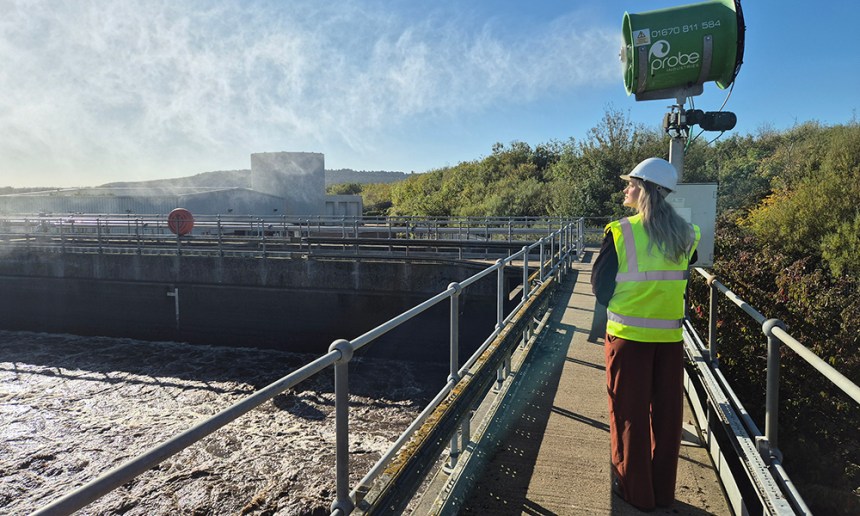
Probe Industries, a global innovator in industrial odour and dust control technology, has launched an industry-first odour enhancement solution that transforms air quality at industrial sites to meet legal requirements for cleaner, healthier and more sustainable environments for workers, visitors and surrounding communities.

Industrial environments – including waste management, water treatment and processing facilities – are often associated with persistent, unpleasant odours that can affect workers and people living in surrounding areas. Evidence links poor air quality and malodours with headaches, irritation, tiredness, low mood, stress and other health-related symptoms, with waste and recycling sectors recording significantly higher sickness absence (12.3 days compared to 6.4 days) than typical UK averages according to the Health and Safety Executive.

At the same time, operators face increasing pressure from regulators and local communities to improve air quality and control odour and emissions in line with environmental laws and permit conditions.

Based on Probe Industries’ leading AiroPure® odour neutralisation technology used widely across the waste management, water treatment, healthcare and hospitality sectors, new AiroVive®, is the world’s first industrial odour enhancer that combines a biodegradable, non-toxic odour neutraliser with mood-boosting fragrance design.

AiroPure is a patented odour elimination solution which works at molecular level to destroy odours and harmful compounds at industrial manufacturing, processing and treatment plants. Independent performance tests show a 100 percent reduction in sulphur dioxide and hydrogen sulphide emissions and a 99.4 percent reduction in ammonia and amines, with employees at trial sites reporting a significant improvement in air quality and working conditions.

With AiroPure’s proven odour neutralisation technology at its core, AiroVive not only captures and contains odour at source but also adds a bespoke, mood-enhancing fragrance to boost wellbeing. The innovative formula is non-hazardous, non-toxic and ISO 14001 compliant to meet environmental responsibility targets.

The odour enhancement technology can integrate directly into existing misting, direct spray and liquid injection operations for flexible deployment across a wide range of applications, including transfer stations, landfill sites, recycling facilities and water processing operations.

Victoria Taylor, CEO at Probe Industries comments, “Industrial odours affect local air quality as well as workplace performance and productivity. We have worked with world-renowned fragrance experts to design a diverse range of scents inspired by the restorative powers of nature and tailored to accompany our proven underlying odour control technology.”

“Based on more than 30 years of neuroscience and developed using detailed consumer research supported by artificial intelligence, AiroVive replaces unpleasant odours with mood-enhancing fragrances, showing a strong commitment to both the workforce and the local community, and demonstrating full regulatory compliance.”

AiroVive is the latest extension of Probe Industries’ world-class portfolio of patented systems which help make industrial environments cleaner, safer and more sustainable in compliance with ISO 14001. Market leading solutions include AiroNaut™, ProFog™, ProActive™, ProDry™ and ProRain™, which offer targeted odour removal, dust suppression and misting applications.

CONTENUR | CONTENUR supports the transformation of Inverness Castle with discreet underground waste solutions

CONTENUR has played a key role in the £47 million transformation of Inverness Castle, supplying a modern underground waste management solution for one of Scotland’s most significant heritage redevelopments, which officially reopened to the public in December.

Now operating as a world-class visitor attraction and cultural gateway to the Highlands, the reimagined Inverness Castle features rooftop viewing platforms, landscaped terraces, café spaces and fully restored historic interiors. The redevelopment has been carefully delivered to enhance the visitor experience while preserving the castle’s commanding presence above the River Ness.

With visitor numbers significantly increased since reopening, effective waste management was a critical consideration from the outset. Traditional above-ground containers were deemed unsuitable for such a sensitive and historically important site, as visible infrastructure would have disrupted key sightlines and detracted from the castle’s iconic character.

To address this challenge, CONTENUR was selected to deliver a Hydraulic Underground Container System that combines operational efficiency with minimal visual impact. Installed below ground level, the system enables waste to be managed safely and hygienically while remaining virtually invisible within the surrounding landscape.

The project specified CONTENUR’s Evolution model disposal columns, selected for their clean, contemporary design and proven durability in high-footfall public environments. The system was carefully integrated into the redevelopment layout, aligning with new terraces and pedestrian routes to ensure ease of use for visitors and practicality for day-to-day operations.

Working in close collaboration with Bancon Construction Ltd, CONTENUR coordinated installation during key landscaping phases of the project. This approach ensured seamless integration with surrounding works while maintaining the highest standards of safety and heritage sensitivity.

Since the castle’s reopening in December, the completed installation has delivered multiple operational benefits. Waste is securely stored underground, improving hygiene standards, reducing odours and supporting a safe and efficient collection process. At the same time, the castle grounds remain visually uncluttered, allowing visitors to fully appreciate the historic setting.

As Inverness Castle embarks on its next chapter as a major visitor destination, CONTENUR’s underground waste solutions are already contributing to the site’s long-term sustainability and overall visitor experience. The project demonstrates how modern infrastructure can successfully support historic environments without compromise.

RCP | Rubbermaid Commercial Products launches new range of stylish yet functional solutions for small spaces

Rubbermaid Commercial Products (RCP) has today announced the expansion of its waste and recycling range with stylish solutions designed for light traffic areas under their “Rubbermaid” brand.

Combining elegant aesthetics with practical performance, the five new bins help to make waste management effortless, even in areas where space is limited. Ideal for boardrooms, receptions, washrooms and front-of-house – the new products feature dual-stream capacity to help boost recycling rates in locations where efficiency, style and sustainability are key priorities.

Designed to impress, built to perform

Changing demands are driving modern facilities to explore new solutions for effective waste management. There’s a growing need for aesthetically pleasing products that blend into interiors. ​At the same time, legislative pressure and changing regulations mean that customers are looking to products that can ensure recycling takes place in every part of their facilities, including areas where it would not have been previously possible.

Available to order now, RCP’s waste and recycling range features five new designs that meet these needs, bringing function and elevated aesthetics to any facility:

Rubbermaid 6L Stainless Steel Round Pedal Bin Wastebasket, Charcoal – Compact and low-maintenance, this bin is ideal for professional washroom and hospitality environments. It features a slow-close lid, hands-free pedal, removable liner and bag cinch system, in a charcoal stainless-steel finish that hides fingerprints, smudges, and dirt.

Rubbermaid Elite™ 45L Stainless Steel Pedal Bin – Sleek and modern, the Rubbermaid Elite 45L features a low-maintenance finish that hides fingerprints. With hands-free operation and a slow-close lid, it’s ideal for hotels, offices, and front-of-house spaces.

Rubbermaid Elite™ 60L Stainless Steel Pedal Bin, Dual Stream – Streamlined and efficient, the Rubbermaid Elite 60L Dual Stream features colour-coded liners for easy waste separation. With hands-free operation, a quiet-close lid, and fingerprint-resistant finish, it’s ideal for workplaces, hotels, and office facilities.

Rubbermaid Premier® Series II 46L Pedal Bin, Charcoal – Built for performance and designed to fit with modern facilities, this bin is ideal for small offices and hospitality environments.

Rubbermaid Premier® Series 71L Pedal Bin, Charcoal, Single or Dual Stream – The perfect marriage of form and function, this large-capacity bin features a stainless-steel foot pedal, integrated LinerLock, and interior venting to make removing rubbish bags simple.

Waste management, reimagined

The new products in the waste and recycling range are welcome additions at a time when facilities are under increasing pressure to improve recycling rates in order to cut costs and deliver on sustainability.

“We’re thrilled to unveil our expanded range of stylish yet functional Waste & Recycling solutions,” said Emilio Capelli, VP Sales & Marketing, RCP EMEA.

“We have always strived to develop solution-based products that support the hard workers who keep the world working. Right now, those workers need solutions that help them deliver on waste management and recycling in every area of their operations. But they also need stylish solutions designed to fit in seamlessly into environments, keeping bins on brand with their facility. That’s why we have expanded our range so that light-traffic areas can benefit from the same waste management systems as every other area of your facility.”

For more information about the RCP waste and recycling range visit: www.rubbermaid.eu/en/rubbermaid-range/.

CRJ Services |  Specialist NPORS Training for Waste, Recycling & Forestry Machinery
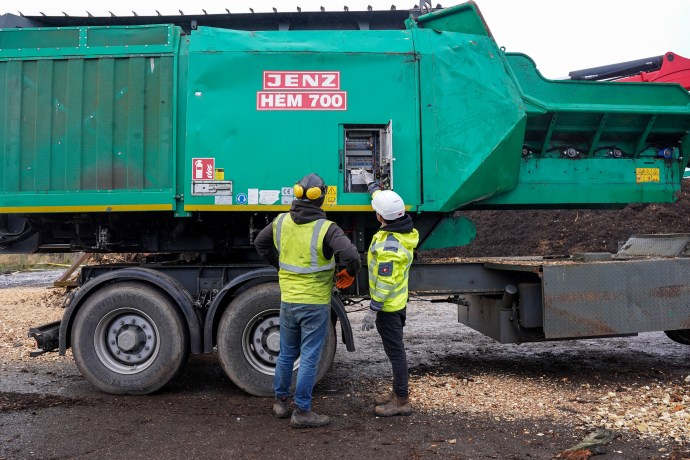
CRJ Services is proud to offer NPORS-accredited operator training and CSCS card pathways, designed specifically for operators working in waste processing, recycling, forestry, and industrial plant operations.

With over 25 years of hands-on industry experience, CRJ delivers practical, machine-focused training that helps operators work safer, more efficiently, and in full compliance with UK site requirements.

Whether hiring or purchasing equipment, we ensure our customers receive the right training from day one. This gives you peace of mind that your operators know exactly what to check, how to work safely, and how to spot potential issues early. The result? Better cost per tonne and less downtime through increased operator awareness.

Expert OEM Machine Training

With 11 years of on-the-job, OEM-trained experience, Joe Symons is CRJ Services’ in-house trainer. Recently qualified as an NPORS Instructor, Joe delivers internal and external training grounded in real-world site conditions, with a strong focus on safe working practices, legal compliance, and efficient machine operation. His practical, experience-led methods ensure all trainees understand not just how to use equipment, but why following the right procedures is so important in the challenging world of forestry, recycling, and waste management.

CRJ Services is uniquely positioned to deliver specialised OEM operator training, led by in-depth knowledge and experience of the forestry, waste and recycling service industries.

Available courses provided by CRJ:

  • N208 Screener
  • N603 Wood Chipper- Shredder
  • N209 Loading Shovel
  • N202 Excavator 360°
  • N120 Plant Loader Securer
  • N010 Telescopic Handler
  • N001 Industrial Counterbalanced Lift Truck
  • N722 Material Re-Handler
  • N106 Log Handler With special focus on:
  • Safe machine operation
  • Site safety and risk awareness
  • Load handling and material flow
  • Pre-use checks and maintenance awareness
  • Emergency procedures
  • Maximising machine efficiency
  • Reducing downtime and costly operator errors

This ensures operators don’t just pass an assessment, they understand how to get the best performance from the equipment while operating safely.

Whether you’re looking to upskill existing operators, meet site compliance requirements, or invest in accredited training for new starters, CRJ Services can support your business.

Simply fill in our form (insert link: https://crjservices.co.uk/training/) or contact Joe at training@crjservices.co.uk to discuss further.

Vision Techniques | Vision Techniques revamp best-selling product reflecting the changing needs of modern fleets

Commercial vehicle safety and security specialists, Vision Techniques, have given one of their products a revamp.

The VT Ident Plus System, one of the company’s best-selling products, has been given a major upgrade, offering even more benefits to customers.

The system is designed to prevent thefts, accidents and unauthorised vehicle use by ensuring only trained and authorised operators can start and operate vehicles and/or equipment, with built in anti-rollaway protection.

The intelligent driver and vehicle authorisation system already came with a variety of benefits including improved operational efficiency, fuel savings and complete controlled access.

However the new system has been upgraded to now offer even more benefits. These include flexible authentication options including passive RFID tags, cards, pin codes as well as integrated telematics for live vehicle tracking via VT Connect.

This means the product can now track driver activity and behaviour, as well as full visibility of driver usage, access attempts and events.

As well as benefitting from all the product upgrades, customers will also get the first year data subscription included in the cost of the system.

Mikaeel Koornhof, Technical Specialist at Vision Techniques, shares what inspired the upgrade.

He said: “The latest evolution of VT Ident Plus reflects the changing needs of modern fleets.”

“Customers are looking for more than access control, they want visibility, accountability, and data they can act on.”

“By integrating telematics, expanded authentication methods, and VT Connect reporting, we’ve enhanced safety, reduced risk, and given fleet operators greater control over how their vehicles are used.”

“The system now supports multiple driver authentication options, detailed driver and vehicle activity logging, live tracking, and configurable vehicle-specific authorisation, while built-in failsafe’s such as park brake monitoring further strengthen on-site and road safety.”

Vision Techniques are the innovative driving force in vehicle safety and security systems, protecting not only vehicles but also the lives of employees, the public and the environments they operate in.

Chosen by some of the largest fleets in the UK, Vision Techniques’ products are influencing and changing safety and security standards across industries daily.

To find out more about Vision Techniques go to: www.vision-techniques.com.

Dennis Eagle | Dennis Eagle and Terberg Matec UK’s Sales and Aftermarket teams have integrated

Market leader for refuse collection vehicles in the UK, Dennis Eagle recently announced plans to combine its Sales and Aftermarket teams with those of its subsidiary division, Terberg Matec UK.

The integration of these teams will see customers benefit from one unified service, offering a single point of contact for any sales and aftersales enquiries respectively. By aligning its resources and industry-leading knowledge, Dennis Eagle intends to deliver more rapid, reliable, and streamlined support to its customers.

“This transformation marks a pivotal moment in our evolution,” said Keith Day, Managing Director, Dennis Eagle. “By bringing these highly experienced teams and their technical expertise together, we are better enabled to deliver exceptional engineering, service excellence, and long-lasting value to our customers. As we move forward, we remain united in our purpose to exceed expectations and provide an outstanding service at every stage of the customer journey.”

As a result of the integration, the sales of all refuse chassis, bodies, bin lifts, and dynamic weighing solutions will now be managed from Dennis Eagle’s Warwick facility, with chassis manufacturing continuing at Blackpool, and Northwest Field Service activity and OEM operations now managed from Warrington. The sales and manufacture of any specialist recycling vehicles will remain within the Worksop facility. To provide the best possible customer experience, all technical experts will be cross trained on both Dennis Eagle and Terberg Matec UK product portfolios, supported by the business’ new Technical Training Centre.

“The integration of our Aftermarket teams is an exciting step towards a better future for both our business and our customers,” said Geoff Rigg, Aftermarket Director, Dennis Eagle. “As customer expectations shift, we want to keep ahead of the curve and harness our combined experience to proactively address new industry challenges as they emerge. Through this unified, consistent approach, we’re able to provide the same world-class service our customers expect across the entirety of our product portfolio.”

The integration came into effect from 5 January 2026.

The post News in brief | CIWM Commercial Partner Updates 30 January appeared first on Circular Online.


The growing scale of innovation in the domain of blockchain and web3 has brought the limelight on DePIN crypto projects. You can come across many projects pioneering the concept of DePIN in web3 that bridge the gap between decentralization and the physical world. The concept of DePIN started gaining recognition in 2023 and has transformed traditional models for developing and maintaining physical infrastructure.

DePIN introduces a new way to create physical infrastructure with decentralized networks and helps network participants gain more control. The decentralized networks utilize a combination of blockchain and tokenization to introduce the concept of decentralized ownership in management of real-world infrastructure. Let us learn how DePIN works and explore its advantages in this post to figure out its transformative impact on infrastructure in web3.

Understanding the Definition of DePIN

DePIN is a new concept that introduces an innovative approach to create and manage real-world infrastructure on decentralized blockchain networks. The Decentralized Physical Infrastructure Networks work by combining traditional model of owning and managing physical infrastructure with the decentralization of blockchain. DePIN networks work with the contribution of physical infrastructure resources by individuals and organizations. The infrastructure resources include electricity, bandwidth, or computing power.

You can notice how the DePIN blockchain association marks a stark distinction from centralized infrastructure that restricts ownership to few corporations. DePIN transforms the utility of infrastructure in web3 by distributing value creation and control. Blockchain protocols help in transparent management of governance and tokens encourage more users to participate in the networks.

The concept of DePIN is similar to that of open-source software albeit for physical systems. It ensures that one company does not control the infrastructure and multiple individuals provide the infrastructure collectively to earn tokens. The new decentralized ownership model lowers barriers and also helps in creating physical infrastructure networks tailored to local requirements.

Build your identity as a certified expert with 101 Blockchains’ Blockchain & Web3 Certifications designed to provide enhanced career prospects.

How Do You Describe the Role of Crypto Tokens in DePIN?

Crypto tokens serve as one of the core elements in the working of decentralized physical infrastructure networks. Any participant contributing resources in DePIN networks will earn crypto tokens for deployment and maintenance of hardware. The term ‘DePIN crypto’ describes the ability of DePIN networks to share value among participants. The crypto tokens rewarded to participants in DePIN networks represent ownership, access to network services and governance rights. As a result, decentralized physical infrastructure networks present better prospects for revolutionizing real-world infrastructure in web3 by encouraging user participation.

Unraveling the Way DePIN Works

The most crucial detail that can help you understand DePIN better is the way it works. You can find the simplest explanation for the working of DePIN in the following steps.

  • The first step in functioning of DePIN begins with network participants contributing their resources to the network. 
  • The resources contributed by network participants become available for access and use to other users in the network. 
  • Smart contracts on blockchain help in recording and managing all activities that involve sharing of resources.
  • Users involved with the network can use the physical infrastructure resources in DePIN networks for different needs and use cases.
  • Participants who contribute resources to the network will receive tokens as rewards for supporting the network.

The ideal approach to understand answers to “What is DePIN in web3?” would not only focus on its workflow but also its essential components. DePIN works its magic with a combination of blockchain technology, tokenization, and physical infrastructure to develop a decentralized infrastructure economy. You should learn about each component in DePIN networks to get a better idea of how they work.

  • Blockchain Layer

The blockchain layer provides the blockchain protocol or distributed ledger for the DePIN network. You can come across different DePIN projects that use blockchain protocols, such as Ethereum or Solana, for decentralization. Network participants can rely on the shared ledger in the blockchain protocol to manage transactions and keep a record of transactions supplied to the network.

Blockchain facilitates decentralization in DePIN networks, which eliminates intermediaries and single points of failure. Smart contracts, which are essential for automatically allocating rewards and validating service agreements, are another critical component in the blockchain layer.

  • Physical Infrastructure Layer

The physical infrastructure layer focuses on real-world infrastructure assets that serve as the core elements of the DePIN network. You can notice the impact of DePIN in web3 infrastructure in the way participants can contribute real-world resources in a decentralized digital network. Participants can contribute bandwidth, energy grids, computing power or storage as resources for physical infrastructure in DePIN networks.

Off-chain networks also serve as a critical component in the physical infrastructure layer. The primary goal of off-chain networks revolves around managing the handover of physical resources with the blockchain protocol handling validation and resource tracking.

  • Tokenization Layer

The tokenization layer in DePIN networks primarily focuses on creation of tokens that demonstrate resource ownership. It also facilitates fair rewards to user for their involvement in the network. The tokenization layer ensures that participants get crypto tokens in return for the resources they supply to the network.

The utility of the tokens is not limited to rewarding contributors for their resources. Crypto tokens in a DePIN network can be used to pay for services in the network and exercise voting rights in governance of the network. Contributors can earn tokens on the basis of value of the resources they contribute, thereby creating an independent economy.

Want to learn the fundamentals of tokenization? Enroll now in the Tokenization Fundamentals Course

Discovering the Transformative Potential of DePIN

The global DePIN market may achieve a total capitalization of almost $3.5 trillion by 2028 (Source). According to a report published in July 2025, DePIN projects have attracted more than $744 million in venture capital funding since early 2024 (Source). The growth of the DePIN market and increase in funding for DePIN projects prove that it is not just a trending concept in web3. On the contrary, DePIN has successfully challenged various inefficiencies associated with traditional infrastructure models with the following benefits.

1. Enhancing Transparency and Building Trust

The DePIN blockchain layer takes care of tracking every contribution and transaction in the network. All network participants get a shared ledger which offers open and tamper-proof records of everything happening in the network. Public availability of data regarding resource contributions and transactions helps in boosting participant confidence. It also fosters trust in verification of rules and payments.

2. More Room for Scalability

DePIN networks reduce barriers to entry, thereby allowing anyone to join the network by contributing resources without delays. The lack of intermediaries provides better opportunities for expanding the network without waiting for approval from gatekeepers. As a result, physical infrastructure can grow at a faster rate, which is a promising highlight for developing regions.

3. Better Scope for Inclusion 

The next crucial advantage of DePIN points at the way it removes dependence on big corporations for infrastructure. DePIN can help individuals and small groups in rural communities develop and manage infrastructure for vital services. It creates new opportunities to ensure that rural regions gain access to vital services, such as electricity or internet connectivity. 

4. Community Infrastructure Ownership and Governance

DePIN networks offer tokens to network participants that help them prove ownership of the resources they contribute to the network. The DePIN crypto tokens also empower participants with governance right. As a result, network participants can propose changes, exercise voting rights, and implement new changes according to community needs. It showcases a significant shift in decision-making powers from executives to the community. Community ownership and governance also empowers DePIN networks to adapt faster to user needs without missing accountability.

5. Improvements in Security and Cost Efficiency

Investors and researchers also believe in the potential of DePIN to revolutionize infrastructure in web3 due to the benefits of enhanced security and cost reduction. The decentralization of blockchain ensures that DePIN networks don’t fail to deliver services when some nodes fail. Without a single actor or entity controlling everything, DePIN networks are not vulnerable to attacks or outages. On top of it, DePIN also reduces total operational costs of physical infrastructure in comparison to centralized models through effective distribution of resources and rewards for contributors.

Start learning about cryptocurrencies with world’s first Cryptocurrency Skill Path with quality resources tailored by industry experts!

Final Thoughts 

The concept of DePIN has been compared to DeFi in many ways, especially for the ability to revolutionize traditional models. Just like DeFi changed how the world viewed financial services, DePIN aims to offer a new perspective on ownership and management of physical infrastructure. The significance of DePIN in web3 revolution is evident in the multiple benefits it has to offer over the traditional models used in real-world infrastructure. Researchers believe in the potential of DePIN to revolutionize infrastructure in web3 by bridging the gap between physical infrastructure and the digital world. Learn more about DePIN use cases and real-world examples of successful DePIN projects now.

The post How DePIN Crypto is Revolutionizing Infrastructure in Web3? appeared first on 101 Blockchains.

Co-op

Young people are at risk of being locked out of the green economy, according to a report by Co-op.

The research found ‘significant barriers’ to accessing green skills and careers, particularly for those from disadvantaged backgrounds.

The Green Opportunities report identifies a range of common barriers preventing young people from entering green careers, including:

  • Limited awareness and understanding of green career pathways;
  • financial barriers and the cost of training or entry routes;
  • lack of local opportunities and exposure to green industries;
  • confidence and identity barriers, with some young people feeling green careers are ‘not for people like me’.

Commenting on the report, Shirine Khoury-Haq, Group CEO of Co-op, said: “Like us, young people across the country care deeply about caring for the environment and protecting nature, but too many feel jobs in the green economy of the future is out of reach.”

“At Co-op, we remain committed to delivering our net zero ambitions and encouraging every community, business and government to play their part. We also remain rooted in our view that talent and skills are distributed evenly across the country, but opportunities are not.”

The research was launched at Westminster alongside a Senior Official for Climate in the Department for Energy Security and Net Zero.

Former CIWM President Dr Adam Read MBE, Chief External Affairs and Sustainability Officer at SUEZ recycling and recovery UK, said the research was not surprising.

Read told Circular Online: “In our own research of 16-24 years olds the sectors going through a net zero transition (like waste management) are not considered attractive because they have no real visibility of the career paths and no real understanding of the roles, skills and qualifications needed.”

“So few schools have careers advisors that are looking at and understand the opportunities in the circular economy and so even in subjects where recycling, environmental management and pollution control are being taught there is little emphasis given to career opportunities, which in my opinion is a real shame!”

“This must change, and this is where major employers like SUEZ and CIWM have much to offer in terms of interesting career path examples, summaries of the core skills needed tomorrow and in five years by our sector.”

Co-op’s £2m Green Opportunities Fund

Co-op has launched its £2 million Green Opportunities Fund, which is delivered by its charity, the Co-op Foundation. The fund will support initiatives helping young people build the skills and networks needed to access green jobs, with a focus on communities historically excluded from the transition to net zero.

The Green Opportunities Fund will be financed through the proceeds from the sales of compostable carrier bags at Co-op stores across the UK.

Co-op says the fund will support a range of activities, including training, mentoring, accredited programmes, community-led projects and partnerships with employers, including in food and farming.

Nick Crofts, CEO of the Co-op Foundation, commented: “The Co-op Green Opportunities Fund will contribute to creating communities that look to a more sustainable future with equal access to opportunity.”

“I’m proud that not only have we used research to guide us where to focus this funding, but that we’ve worked with young people to develop this fund. We’re passionate that no decisions are made about young people without young people.”

The post Young people at risk of being locked out of green economy, Co-op report finds appeared first on Circular Online.

Food waste

The EU will struggle to meet its 2030 food waste and climate targets without a new way to pay for food waste prevention and collection, according to a new report by Zero Waste Europe.

The report, produced by the Bio-based Industries Consortium (BIC) and Zero Waste Europe (ZWE), found that the EU will struggle to meet the targets and proposes introducing Extended Producer Responsibility for Food Products (EPRFP).

As part of the Waste Framework Directive, the EU has set a target to reduce food waste by 30% per capita at the household retail and restaurant level and 10% at the manufacturing level by 2030.

Food waste is responsible for 8–10% of global greenhouse gas emissions, while EU citizens generate around 130 kg of food waste per person each year.

EU Member States are obligated to separately collect biowaste; however, a report by ZWE found that only an estimated 26% of kitchen waste is currently captured, with the rest ending up in landfills or incinerated.

ZWE argues that an EPRFP scheme covering wholesalers, importers and retailers (limited to their own ‘white label’ products) would transfer a portion of the financial and operational responsibility for food waste from municipalities and taxpayers to producers.

Commenting on the report, Joan Marc Simon, Founder of Zero Waste Europe, said: ”Now that we have EU targets on food waste and the obligation to separately collect bio-waste, we need the economic instruments to meet them.”

“EPR for food products can mobilise the funding necessary to reduce food waste and increase separate collection of organics.”

The post EU could cut bio-waste by introducing EPR for food products, report shows appeared first on Circular Online.

The apprehensions regarding trust continue to dominate most of the concerns associated with adoption of new technologies like blockchain. Blockchain has proved to be a highly disruptive technology, especially in the financial services sector, disrupting business models and unearthing new levels of efficiency. The adoption of blockchain in financial services raises many questions about the possible ways in which financial institutions can build trust using blockchain.

Financial institutions have embraced blockchain technology with enthusiasm, thereby making organizations think about ways to tap into its innovative potential without the risks. The best thing about blockchain that builds trust in financial services is that it aims to create trustless systems. An overview of the use cases of blockchain in the domain of financial services and its benefits can show how it enhances trust.

Relevance of Blockchain for Financial Services

The rising adoption of blockchain technology in the financial services sector serves as a testament to its potential for revolutionizing the industry. Blockchain technology has not only transformed the conventional approaches to conduct financial transactions but also improved customer trust in financial services. The impact of blockchain in financial industry can be seen in the growth rate in adoption of blockchain in financial institutions. A report published in July 2025 revealed that blockchain adoption increased by almost 47% in traditional banks and 69% in fintech companies (Source).

Why do you think more financial institutions want to use blockchain technology? Blockchain is relevant in the domain of financial services as it offers an innovative solution to enhance transparency, accountability and security. Financial institutions can leverage blockchain as a decentralized digital ledger to record transactions, which will be shared across multiple computers. The following key characteristics of blockchain make it a relevant choice for redefining trust in financial services.

  • Decentralization 

As compared to traditional ledgers and databases controlled by central banks and government authorities, blockchain offers a shared ledger. The shared ledger will be available to all participants in the blockchain network of a financial institution. As a result, it can distribute control among all participants and reduce the risks of data manipulation by central authorities.

  • Immutability

People searching for answers to “What is the role of blockchain in financial services?” must also know that blockchain offers the benefit of immutability. It implies that transactions recorded on the blockchain cannot be modified, thereby providing better data integrity.

  • Transparency

Blockchain also offers the assurance of transparency with the shared ledger accessible to all participants in the network. Everyone who has the ledger can check the validity of transactions in real-time and view the audit trail of transactions. 

Get Certified Enterprise Blockchain Professional (CEBP)™ certified and gain the skills to lead real-world enterprise blockchain projects with confidence.

Understanding the Use Cases of Blockchain in Financial Services Sector

You can get a better impression of how blockchain fosters trust in financial services by learning about its use cases in finance. The impact of blockchain on financial services has been quite powerful with companies reimagining their traditional workflows in many ways. A glimpse of some of the notable use cases of blockchain technology in the field of financial services can help you understand its capability to build trust.

  • Smart Contracts for Loans and Insurance Claims

The foremost entry among the applications of blockchain in finance points at the use of smart contracts for automation of financial agreements. With smart contracts, most of the financial services can be delivered without intermediaries. Smart contracts play a vital role in autonomous management of risk pools, claims processing, and premium collection in insurance. Smart contracts also remove traditional intermediaries from lending processes, thereby reducing costs and streamlining operations.

  • Sending and Receiving Money across Borders

Traditional approaches for cross-border payments have always been expensive and extremely slow. Blockchain facilitates direct peer-to-peer payments without involving banks as intermediaries, thereby making cross-border payments faster and more efficient. You can send and receive money across borders with blockchain reducing transaction fees and reducing transaction time from days to minutes.    

  • Preventing Fraud and Managing Risks

The advantage of immutability with the shared ledger in blockchain offers a secure approach to track transactions in real-time. As a result, it proves to be the most effective solution to prevent fraud in financial services. Many financial institutions have been using blockchain for real-time risk monitoring and enhancing their fraud detection systems. For instance, the use of zero-knowledge proofs in blockchain makes risk assessment more secure and confidential.

  • Digital Identity Verification

Another notable use case of blockchain in the field of financial services that fosters trust is digital identity verification. Blockchain-based identity solutions have become the preferred choice for security identity management in financial institutions. The innovative identity solutions limit the need to depend on centralized database for identity verification. On top of it, blockchain also provides the ideal framework to enhance security and privacy of digital identity of customers.

Start your blockchain journey now with the Enterprise Blockchains Fundamentals

How Does Blockchain Improve Trust in Financial Services?

The use cases of blockchain for finance reveal significant insights about its potential to build trust in financial services. A review of the applications of blockchain in financial services reveals how it removes intermediaries and delivers promising benefits. Most of the discussions on the benefits of blockchain technology for financial services revolve around faster transactions and cost reduction. You can understand how financial services can build trust using blockchain in the following ways.

  • Delivering True Transparency and Accountability

Traditional systems in financial services did not offer transparency into transaction details with bureaucratic barriers and red tapes. Blockchain changed the equation by providing a public shared ledger accessible to all participants. The ledger maintains a record of all transactions, thereby allowing customers to verify the authenticity and accuracy of transactions. With this level of transparency, financial institutions become more accountable for their services and actions. Customers can also get clear audit trails of their transactions on blockchain, thereby making them trust financial services.

  • Error-Free Transactions with Smart Contracts 

Executing financial transactions for traditional contracts and agreements introduced a lot of manual error and inconsistencies. Smart contracts showcase the best use of blockchain in financial industry by coding the terms of agreements directly into code on blockchain networks. The ability of smart contracts to enforce and execute agreements autonomously without intermediaries reduces human errors. As a result, customers are more likely to trust financial institutions for execution of agreements with more reliability.

  • Introducing the Benefits of Cryptographic Security

Every customer prioritizes security in financial services and all types of interactions with financial institutions. Blockchain outperforms traditional security mechanisms in finance with the support of advanced cryptographic techniques for data encryption. The use of cryptographic hashes ensures that every transaction is linked to the previous transaction, making it virtually impossible to tamper with transactions. Public-private key cryptography also ensures that only authorized users can access funds on blockchain, thereby building customer confidence in financial services.

  • Reducing the Risks of Fraud 

Fraud prevention is one of the most critical use cases of blockchain in the domain of financial services. The adoption of blockchain in financial services brings the benefits of transparency and immutability, which enable easier fraud detection. All the participants in a blockchain network can see every transaction and its details, making it impossible to manipulate transaction records without anyone noticing. The capability for fraud detection in financial transactions with blockchain technology enhances the trust of customers in financial services.

  • Verifying Transactions in Real-Time

The most significant benefit of blockchain in finance points at real-time transaction verification. Customers can verify the completion of their transactions immediately, thereby reducing possibilities of discrepancies. The faster transaction settlement improves the confidence of customers as they feel more secure about efficient and accurate processing of their transactions.

Start learning Blockchain with World’s first Blockchain Career Paths with quality resources tailored by industry experts Now!

Final Thoughts 

Blockchain technology has introduced many benefits in the domain of financial services. The traits of blockchain, such as decentralization, immutability, and transparency, offer the ideal solutions to enhance customer trust in financial institutions. Decentralization helps in removing intermediaries, which contributes heavily to improvements in transaction settlement, error reduction, and efficiency. Immutability ensures that no one can tamper with transaction records and facilitates the assurance of enhanced data integrity. On top of it, transparency helps customers keep track of their transactions while making financial institutions more accountable for their services. Learn more about the practical examples of blockchain adoption in financial services and its benefits now.

The post How Financial Services Can Build Trust Using Blockchain appeared first on 101 Blockchains.

deposit return scheme DRS

Ahead of the October 2027 launch of the UK’s DRS, the scheme administrator has announced ‘Exchange for Change’ as its new trading name.

Alongside the new trading name, Exchange for Change also has a new brand icon that will appear on every bottle, can and return point associated with the scheme.

Deposit return scheme
Exchange for Change says the new logo is designed to be instantly recognisable.

The icon shows bottles and cans turning into coins and, the UK’s Deposit Management Organisation (DMO) says, is designed to reflect the full range of eligible containers within the scheme.

The UK’s DMO is the not-for-profit body established to design and deliver the scheme across England, Scotland and Northern Ireland. Wales withdrew from a UK-wide scheme in 2024 due to time constraints that prevented the UK Government from considering a request for an exclusion from the Internal Market Act.

The administrator plans to formally share the scheme logo and detailed guidance on how and when to apply it, including placement, sizing and approved formats and colours, with businesses ‘in the coming weeks’.

Russell Davies, CEO of Exchange for Change, said: “Our new name reflects what this scheme is all about, and that’s making a simple change that has the power to transform streets, communities and recycling habits across the UK.”

“The scheme remains on track to go live in October 2027, and we look forward to working closely with partners across the UK as we move into the next phase.”

Industry reactions

Commenting on the announcement, Travis Way, Managing Director at EcoVend, said: “Public engagement will be one of the defining factors in whether the UK’s DRS succeeds, so giving it a clear, consumer-friendly identity is a significant and welcome step.”

“A scheme like DRS only works when consumers, producers and retailers are all aligned, and consistency in naming, branding and messaging will be critical to driving participation at scale.”

“With the October 2027 deadline approaching, 2026 will be the key preparation year for businesses, giving them a narrow but vital window to get systems, infrastructure and communications in place ahead of launch.”

Elise Seibold, Chief Operating Officer at Suntory Beverage & Food GB&I, commented: “We welcome this new identity for the UK Deposit Management Organisation, communicating the simple act of returning drinks containers for a deposit to help drive real environmental change.”

“Ahead of the October 2027 launch date, we are committed to working collaboratively to deliver a UK scheme that works for everyone – drinks producers, consumers, retailers and wholesalers alike.”

“Together, we can create a scheme that reduces litter, bolsters recycling efforts and shapes a more circular economy for our drinks containers.”

Louisa Goodfellow, Policy Manager at Ecosurety, said: “Early clarity for producers is absolutely essential, and the introduction of the new trading name and brand identity is an important step toward giving businesses the certainty they need to prepare for compliance.”

“We now look forward to further detail on key elements of the scheme, particularly around cost structures, reporting arrangements and retailer obligations. However, another important area where clarity is still needed is the extent to which Wales will align with the scheme being implemented across England, Scotland and Northern Ireland.”

“The Welsh Government has been clear in its intention to include glass within its DRS and has sought an exemption from the UK Internal Market Act to proceed on that basis. Understanding how this will be resolved, and what it will mean for producers operating across the UK, remains a key question.”

The post UK DRS rebrands as Exchange for Change ahead of 2027 launch appeared first on Circular Online.

Blockchain was believed to be a technology that could only serve as the driving force behind cryptocurrencies. Some of you may be surprised to know that many real world blockchain use cases have gained traction and that too beyond the domain of cryptocurrencies. Blockchain has the potential to solve many problems in the real world with its distinctive capabilities. The use cases of blockchain in different industries capitalize on the elements of decentralization, immutability, and transparency.

Many people will believe that organizations adopting blockchain technology are just experimenting with it. Interestingly, blockchain solutions have delivered tangible benefits such as revenue growth, enhanced productivity and more security in various sectors. You can come across multiple use cases of blockchain technology that have been changing the world one step at a time.

Unraveling Top Blockchain Use Cases with Real-World Impact

Businesses and governments across the world have been leveraging blockchain technology to solve real problems. Startups and venture capitalists worldwide have invested almost $4.8 billion in blockchain use cases in 2025 (Source). With over 80% of public companies in the world adopting blockchain solutions, you can expect mainstream use of blockchain in few years (Source). 

The success of blockchain in every cryptocurrency use case showcases how it has redefined the management of data and transactions. An overview of the use cases of blockchain technology that have been changing the world can help you understand its capabilities.

1. Real-time Transparency in Supply Chains

Traditional supply chains have struggled with numerous problems due to the lack of transparency. Businesses and customers could not find complete visibility into the journey of products through the supply chain. As a result, it is extremely difficult to verify the authenticity of products, thereby creating opportunities to introduce counterfeit products. 

Blockchain can help in solving the problem of supply chain visibility by offering a shared ledger for every participant. The shared ledger maintains a clear record of every step in the journey of products through a supply chain. Companies as well as customers can witness the full path of a product from its origins to the store shelves.           

The best examples of uses of blockchains in supply chain management draw the limelight towards big companies like IBM and Maersk. The companies use blockchain technology to trace the journey of products from manufacturing stages to the hands of customers. Blockchain has been changing supply chains worldwide by adding value through the following benefits.

  • Companies can leverage blockchain technology to trace their goods in real-time.
  • Immutable supply chain records on a blockchain enable fraud prevention and reduce risks of counterfeit goods.
  • Customers are more likely to trust products that offer verifiable data about their origins. 

Dive deep into how blockchain revolutionizes supply chains, driving transparency, efficiency, and new value creation with the Enterprise Blockchains and Supply Chain Management Course.

2. Stronger Safeguards for Intellectual Property Rights

Every creator is worried about possibilities of someone copying and distributing their work without their permission. The search for answers to “What is the use case of blockchain in real life?” will lead you to blockchain solutions tailored to fight copyright infringement. It is important to know that intellectual property theft causes damages to the US economy and robs creators.

Copyright infringement and intellectual property theft not only damages the brand of a business but also creates legal complexities. Blockchain solutions solve these problems by leveragisng ditinct capabilities of blockchain technology. Blockchain offers an easy way to document proof of ownership of your intellectual property with verifiable credentials. The credentials can not only prove ownership of intellectual property but also record the date of creation.

Blockchain also offers the flexibility to use smart contracts for automated licensing. Creators can use smart contracts to enforce the licensing terms, royalties and payments for their intellectual property. You can notice how blockchain use cases have been changing intellectual property and copyright protection in the following benefits.

  • Creators can avoid unwanted legal disputes over their intellectual property with verifiable proof of ownership on blockchain.
  • Blockchain technology allows creators to leverage smart contracts for secure intellectual property transfers.
  • Creators can use blockchain to maintain a clear audit trail of intellectual property registration and usage, thereby preventing plagiarism.

3. Enhancing Protection of Digital Identity and Data Privacy

Users have put a lot of their personal data on the internet in centralized databases of different organizations to access services. Malicious agents attack these centralized databases to gain unauthorized access to personally identifiable information and sensitive data. Exposure of confidential user data leads to depletion of trust, financial losses, and reduced customer engagement. 

The examples of blockchain use cases by industry can shed light on how blockchain technology helps in combating data privacy and digital identity issues. Blockchain helps in designing tamper-proof decentralized systems that reduce cases of fraud and identity theft in many ways. Apart from immutable audit trails, blockchain offers the foundation for solutions like self-sovereign identity and zero-knowledge proofs. These solutions protect personal information and facilitate identity verification with more security.

You can find the best use case of blockchain for digital identity and data privacy protection in the healthcare sector. Blockchain provides an ideal solution for encryption of patient records, enabling only authorized users to access data. It also offers a secure system for faster data sharing with accuracy while safeguarding patient privacy. The value of blockchain for digital identity protection and data privacy is clearly evident in the following benefits.

  • Blockchain safeguards personal and sensitive user data with cryptographic encryption. 
  • Consumers are more likely to trust brands and organizations which leverage blockchain to safeguard user data.
  • Blockchain also facilitates seamless sharing of essential data between service providers with highest security.

Ready to master data privacy in blockchain? Enroll in the Blockchain and Data Privacy Masterclass and gain the practical insights you need to navigate real-world privacy challenges with confidence.

4. Freedom from Intermediaries in Contract Execution 

The traditional approach to execute contracts involves bringing intermediaries, such as banks, lawyers and notaries, into the picture. It not only increases the burden of additional costs but also creates delays that may cause frustration for involved parties. On top of it, the mistakes by third parties reduce trust in traditional contracts and affect the efficiency of deals.

Most of the real world blockchain use cases draw attention towards the applications of smart contracts. Smart contracts can automatically initiate transactions when they verify that certain conditions have been fulfilled. In addition, smart contracts also ensure that no one can change the terms of contracts after deployment on blockchain. All the parties involved in a contract can see every step of contract execution and verify the security of contracts.

The use of smart contracts in the real estate and insurance sector offers proof of their utility in contract execution. Companies can leverage smart contracts to transfer property titles and settle insurance claims without delays. The benefits of smart contracts showcase how blockchain use cases have an impact on companies in the real world. 

  • Smart contracts help in finishing deals without burdening involved parties with more costs and delays.
  • Executing agreements with smart contracts offers better efficiency and transparency into the contract execution process.
  • Smart contracts not only remove intermediaries but also ensure automatic contract execution while following all terms of contracts.

Curious to understand the complete smart contract development lifecycle? Enroll now in the Smart Contracts Development Course

5. Tamper-proof and Transparent Voting Systems

Fair elections seem to be a distant dream with the traditional voting methods that always come with risks of tampering. The lack of clear verification and records creates more possibilities for fraud, thereby reducing public trust in fairness of elections. In addition, you can also notice how old machines and paper ballots create delays in publishing results. Traditional voting methods don’t provide visibility into the process and make citizens question the outcomes of elections.

You can look beyond cryptocurrency use case and discover how blockchain can enhance voting by recording each vote with an immutable entry. Blockchain systems can ensure completely secure and transparent voting with flexibility to track ballots. Without intermediaries, you don’t have to worry about intermediaries meddling with the ballot count.

One of the prominent examples of the adoption of blockchain solutions in voting is Estonia. The country has successfully leveraged blockchain technology to create an e-voting system that allows citizens to vote with safety. Blockchain can help in transforming election process in every country with the following benefits.

  • Verifiable results on blockchain with proof of voting helps in increasing voter trust in the election process.
  • Blockchain systems can facilitate faster counting and reporting of votes.
  • The advantages of blockchain systems in elections can reduce risks of electoral fraud.

Curious to learn about blockchain implementation and strategy for managing your blockchain projects? Enroll Now in Blockchain Technology – Implementation And Strategy Course!

Final Thoughts 

Blockchain is more than just the technology that you can use to create cryptocurrencies. The capabilities of blockchain have been driving many new use cases across various industries with diverse benefits. You can notice how the uses of blockchain technology enhance supply chain transparency, credibility of elections and safeguard data privacy. The benefits of blockchain use cases in the real world provide a clear impression of how it is changing the world. Learn more about other use cases of blockchain technology to understand its potential for transforming the world itself.

The post 5 Real-World Blockchain Use Cases That Are Changing the World appeared first on 101 Blockchains.

Zero Waste Scotland

Zero Waste Scotland has announced Ciaran McGuigan will replace Ian Gulland as its CEO.

McGuigan, Zero Waste Scotland’s (ZWS) current Finance and Corporate Services Director, succeeds Gulland, who recently stepped down after eleven years in the role.

The appointment was approved by the Scottish Government, in line with standard practice for Government bodies.

McGuigan formally begins the role from 1 February 2026. ZWS said further details of management arrangements for his replacement as Finance and Corporate Services Director will be announced soon.

Welcoming McGuigan to the role, Cabinet Secretary for Climate Action and Energy, Gillian Martin, said: “The Scottish Government is committed to achieving a more circular economy – one where we keep materials and goods in use for as long as possible – and Zero Waste Scotland is a key partner in supporting us with this ambition.”

“Our collaboration is an important one, and I look forward to working with Ciaran and his team to help people and businesses reduce waste and lower emissions, supporting Scotland’s climate and nature targets.”

Reacting to his appointment, McGuigan said: “It is a huge privilege for me to have the opportunity to lead Zero Waste Scotland into our next phase as we grow the circular economy, create skilled green jobs, help regenerate communities, and deliver a resilient and prosperous economy that reduces our climate impact.”

“I’m very much looking forward to continuing to work closely with our Board, with Scottish Government, and, of course, the many key sectors and stakeholders who are vital to the delivery of Scotland’s circular economy ambitions.”

The post Zero Waste Scotland appoints Ciaran McGuigan as new CEO appeared first on Circular Online.

Wales

Welsh charities urge the UK Government to approve the Welsh Government’s request to collect glass as part of its Deposit Return Scheme (DRS).

A coalition of Welsh environmental and charitable organisations has written to the UK Government urging it to approve an exclusion under the Internal Market Act (UKIM Act) that would allow Wales to collect glass in its DRS.

The Welsh Government confirmed plans to include glass as an in-scope material in its DRS at launch, but no deposit will be charged on any glass containers.

The schemes in England, Scotland, and Northern Ireland cover PET plastic, steel, and aluminium drinks containers, but exclude glass.

Last year, the Deputy First Minister Huw Irranca-Davies announced that the Welsh Government had formally proposed an exclusion for the DRS in Wales to the UKIM Act.

He also said that if an exclusion is not granted, the Welsh Government will scrap its plans to launch a DRS in the country.

If Wales decided not to proceed with its scheme, it could have profound implications for DRS policy in the other UK nations. CEO of DDRS Alliance, Duncan Midwood, said such a move could result in the other countries’ schemes being scrapped.

The letter argues that the DRS follows the same model of devolved decision-making, allowing Wales to develop solutions that reflect its own environmental challenges and community needs.

Owen Derbyshire, Chief Executive of Keep Wales Tidy, commented: “People across Wales care deeply about the quality of their local environment.”

“A DRS that includes glass would make a real difference to litter levels, public safety and the condition of our public spaces.”

“Wales has taken a thoughtful, evidence-based approach to developing this policy, and it’s important that we are able to move forward as planned.”

The letter is supported by Keep Wales Tidy alongside Surfers Against Sewage, Trash Free Trails and Wales Environment Link.

A Defra spokesperson told Circular Online: “We are committed to delivering a Deposit Return Scheme which will go live in October 2027.”

“We have received the Welsh Government’s proposal for a UK Internal Market Act exclusion for their DRS, and now all parties to the Resources and Waste Common Framework are carefully considering this.”

Scotland’s DRS collapsed in 2023 after the then Conservative Government declined a request for full exclusion from the UKIM Act, which meant it could not include glass in its scheme.

Last year, Wales withdrew from developing an aligned DRS across the UK. Circular Online learned that the Welsh Government withdrew due to time constraints that prevented the UK Government from considering a request for an exclusion from the UKIM Act.

The post Charities urge UK Government to allow Wales to collect glass in its DRS appeared first on Circular Online.

The scale of innovation that blockchain technology has fostered across different industries shows that awareness about blockchain architecture is growing. You must know about the basic components, layers, and consensus mechanisms in blockchain architecture to create efficient blockchain systems. Your search for the best blockchain architecture glossary ends here as we discuss the most notable terms you will come across in blockchain systems.

According to a new survey, almost 60% of Fortune 500 companies are experimenting with blockchain adoption through new initiatives (Source). The growing adoption of blockchain technology will drive not only business leaders but also aspiring professionals to learn about blockchain and web3. The ideal approach to start learning about blockchain architecture and how it works involves familiarizing with the most important terms. 

Unraveling the Simplest Blockchain Architecture Glossary for You

One look at the examples of different blockchain applications, whether it is cryptocurrencies or innovative dApps, will leave you searching for more about the technology. As you dive deeper into blockchain terminology, you will find how the smallest building blocks shape the complex architecture of blockchain systems. Breaking down the fundamental terms into simple explanations can help you get a better idea of blockchain architecture.

The Network Components 

You must have heard the term ‘network’ in most of the descriptions of blockchain technology. Blockchain is generally defined as a peer-to-peer network that takes collective responsibility of maintaining a shared ledger. The nodes serve as building blocks of the blockchain network and help in performing different tasks. The primary responsibilities of a node in blockchain networks include transaction validation, storing a copy of the ledger and transferring information throughout the network. 

Nodes are a common addition in any blockchain terms glossary as without them, you cannot think of decentralization in blockchain. Depending on the functionality, you will find different types of nodes with distinct roles.

  • Full Nodes

A full node is responsible for storing a full copy of the complete blockchain history and helps with independent verification of all transactions and blocks.

  • Light Nodes

Light nodes work on storing on the header of blocks and depend on full nodes to verify the inclusion of transactions in a block. The light node follows the Simple Payment Verification model, thereby earning the name SPV node, and is used frequently on mobile devices.

  • Validator or Miner Nodes

You cannot create a web3 glossary for blockchain architecture terms without including validator or miner nodes. These nodes actively drive the consensus mechanism of a blockchain and help in creating and adding new blocks.

Elevate your career and shape the future of decentralized systems with the Certified Enterprise Blockchain Architect (CEBA)™ certification—where expertise in blockchain architecture meets endless possibilities.

Data Structure of the Blockchain

After learning about the basic units of a blockchain, you might be curious to know about how the blockchain stores transaction data. As the name implies, blockchain stores data in the form of a chain of blocks, which is a sequence of data units linked to each other with cryptographic hashes.

  • Blocks

The block in a blockchain represents a container for transaction data. It helps in storing a collection of validated transactions and a timestamp. Another important element in a block is the cryptographic hash that connects it with the previous block. The header of a block includes the metadata of the block, hash of the previous block, the Merkle root and the timestamp. The body of a block includes the list of transactions validated in the concerned block. 

  • Cryptographic Hash

The cryptographic hash is also an important addition in crypto terminology for beginners as it provides cryptographic security in blockchain. It is a fixed-length string that includes letters and numbers generated from input data through algorithms like SHA-256. Even the smallest change in input data will completely change the output hash, thereby ensuring immutability of block data.

  • Merkle Tree

You cannot learn about blockchain architecture without understanding the Merkle tree, a data structure that offers summary of all transactions in a specific block. The Merkle Root is a single hash in the block header that verifies the inclusion of a specific list of transactions in a block.

Enroll now in the Blockchain Scalability and Interoperability Mastery Course to learn the skills needed to develop faster, scalable, robust, and interoperable dApps.

Defining the Blockchain Rulebook with Consensus

Every blockchain terms glossary includes references to different types of consensus mechanisms. The consensus mechanism represents the algorithm with a predefined set of rules that help nodes in a blockchain achieve agreement on the validity of transactions. You will find different types of consensus mechanisms in discussions on blockchain architecture.

  • Proof of Work

The Proof of Work consensus mechanism works through the effort of miners, who use computational power to solve mathematical puzzles. It is one of the most secure consensus mechanisms albeit with extremely high resource consumption.

  • Proof of Stake

New blockchain networks rely on the more efficient Proof of Stake consensus that involves validators locking up their tokens to become eligible for adding new blocks. Early blockchain networks like Ethereum have embraced Proof of Stake for its energy efficiency.   

Variants of Blockchain Architecture 

The general notion about blockchain architecture is that every blockchain is a distributed and shared ledger accessible to every participant. Any reliable blockchain architecture glossary will tell you otherwise as there are four different types of blockchain architectures.

  • Public Blockchain

Any blockchain which is accessible to every participant and does not involve permissions can be classified as a public blockchain. The two notable examples of public blockchain are Ethereum and Bitcoin.

  • Private Blockchain

Businesses can create private blockchain for their specific needs with clearly defined permissions. The permissioned blockchain will be accessible only to few authorized participants within the organization.

  • Hybrid Blockchain

You would not get any marks for guessing that a hybrid blockchain brings the best of public and private blockchains. Hybrid blockchains such as Dragonchain offer the middle ground for users confused between private and public blockchains.

  • Consortium Blockchain

The search for blockchain terminology related to architecture will also lead you to consortium blockchains. The primary idea behind a consortium blockchain like R3 Corda revolves around several private nodes owning and governing the blockchain in collaboration with each other.

Start your blockchain journey Now with the Enterprise Blockchains Fundamentals

Identifying the Layers in Blockchain Architecture

You will find different approaches to implement the diverse variants of blockchain architecture without any specific standard. Most of the blockchains follow a layered structure and understanding the layers is essential to implement blockchain architecture.

  • Application Layer

The application layer is responsible for hosting applications that will interact with the blockchain. The notable components in the application layer include the user interface, dApps, and smart contracts.

  • Service Layer

Every web3 glossary will focus on the service layer in blockchain architecture as it defines the functionality of blockchain. The components in this layer include DAOs, oracles, and wallets.

  • Consensus Layer 

The consensus layer or protocol layer is responsible for defining how the nodes in a blockchain can achieve agreement. You will find consensus protocols, virtual machines, and sidechains in the consensus layer of blockchain architecture.

  • Network Layer

The network layer of blockchain helps in facilitating interaction among nodes with execution environments and communication mechanisms.

  • Data Layer 

Data layer is a critical component of blockchain architecture that helps in creating, managing, and encrypting data. The prominent components in the data layer include digital signatures, data blocks, hashes, storage, and the Merkle tree.

  • Hardware Layer

The most overlooked layer in blockchain architecture, the hardware layer, facilitates the physical resources required to host the blockchain. It includes nodes, servers and mining hardware used for the blockchain.

Final Thoughts 

An overview of the blockchain architecture glossary reveals that understanding the basic components can help you easily figure out how blockchain works. It not only provides a detailed understanding of blockchain architecture but also the insights required to choose the ideal architecture. You would need comprehensive training resources to learn more about blockchain architecture.

The Certified Enterprise Blockchain Architect (CEBA)™ certification program by 101 Blockchains offers a credible learning tool to understand blockchain architecture. It includes lessons on advanced concepts of blockchain architecture and shows you how to choose the best blockchain platforms. Take the first step to becoming a blockchain architecture expert right now.

Final Summary

  • The growing adoption of blockchain technology has been driving the urgency to learn more about blockchain architecture.
  • The network components in blockchain architecture include full nodes, light nodes and miner or validator nodes.
  • Data structure of blockchain architecture resides in blocks, cryptographic hashes and the Merkle tree.
  • Consensus mechanisms define the rulebook in blockchain architecture with different consensus mechanisms offering distinct advantages.
  • Businesses can choose between public, private, hybrid, or consortium blockchain architecture according to their needs.
  • The layers in blockchain architecture include application layer, service layer, consensus layer, data layer, network layer and infrastructure layer.

The post Blockchain Architecture Glossary: Nodes, Consensus, Layers & More appeared first on 101 Blockchains.